Schema Therapy Training for Ukrainian Therapists: Five Humanitarian Seats in Every Cohort
By Travis Atkinson, LCSW, LICSW
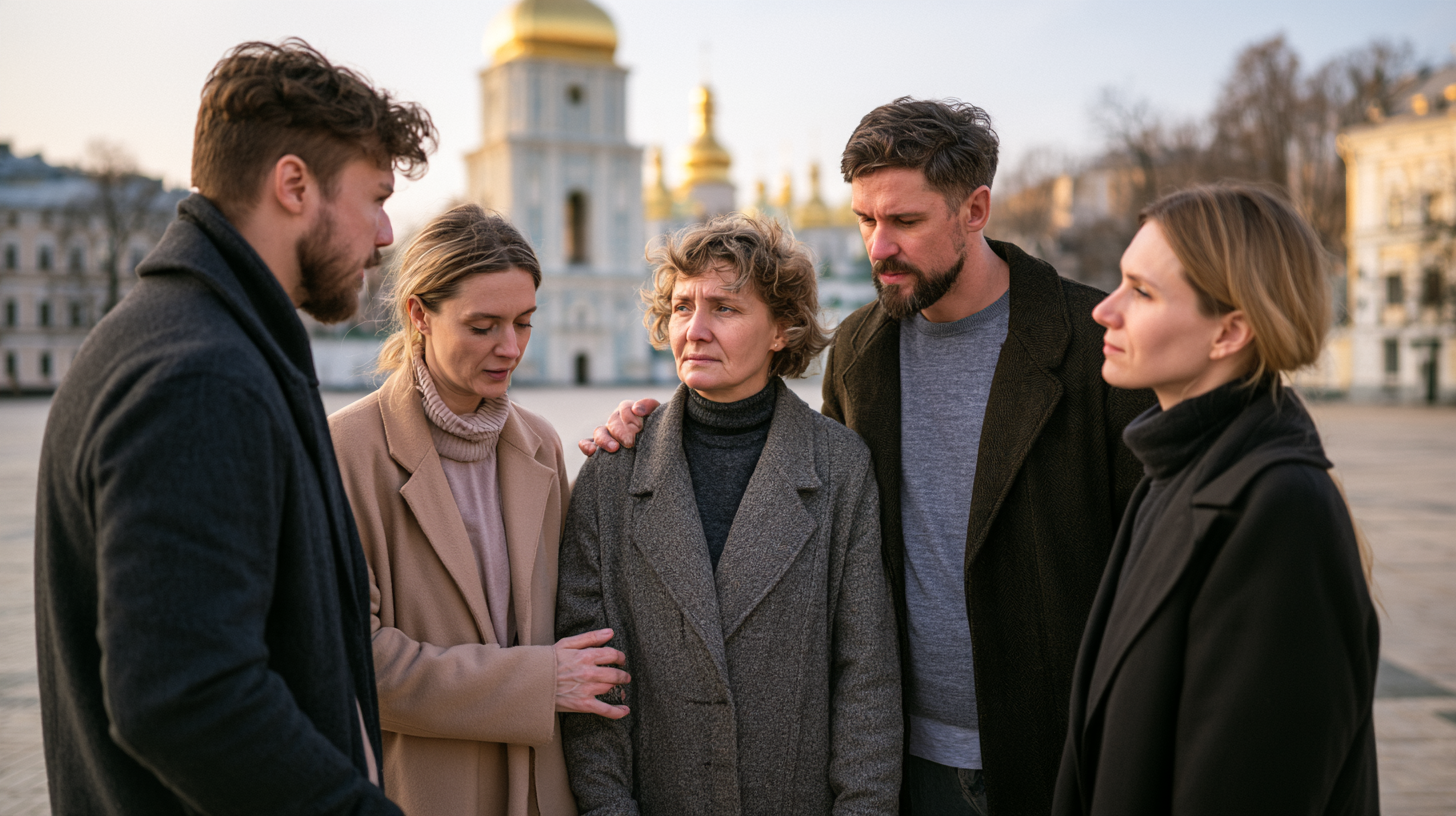
I will not name the Ukrainian clinicians who have trained with us; safety always comes first. Olena is a composite of several trainees, and no detail identifies any one person. The shelters are real.
The siren starts ten minutes into class.
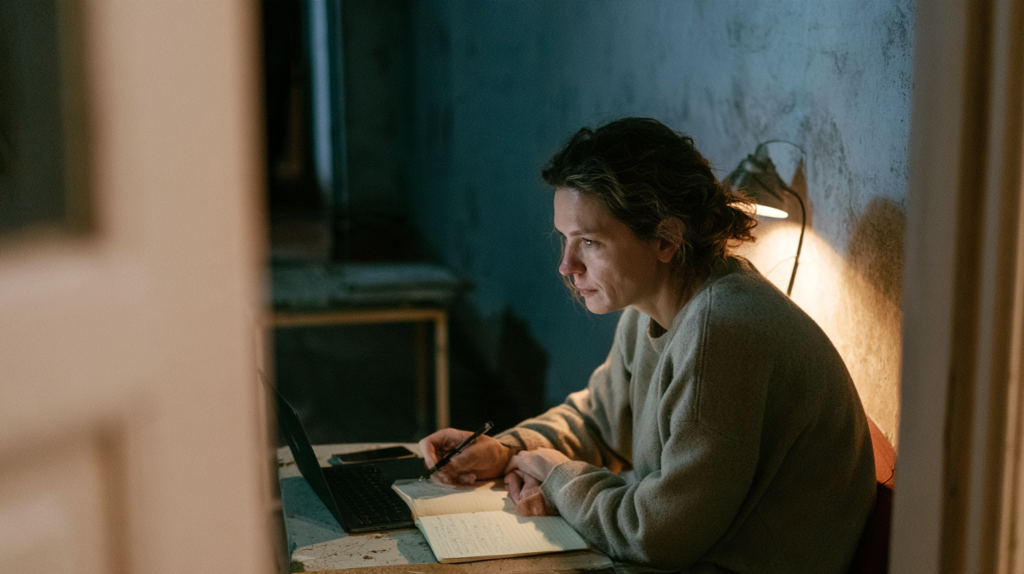
Olena carries her laptop down two flights of stairs to a basement corridor. When her camera comes back on, the frame is tilted and a concrete wall fills the screen. She unmutes. “Sorry. I’m here. Can we go back to the chairwork?”
Nobody speaks for a second. Then the demonstration starts again.
On Thursday, a veteran will sit across from her. When his wife cries, he goes silent, and Olena wants to know what to do with that silence before he arrives.
I have taught schema therapy since the early 2000s, and I have never had trainees show up under conditions like these. Since the full-scale invasion began and we opened an honorary rate, Ukrainian colleagues have joined every individual schema therapy cohort I have taught. They have logged in from shelters, through power cuts, after nights without sleep. Still, they come, every week. I am grateful, and more than a little in awe of how committed they stay.
At a glance
- Who: licensed mental health professionals living and practicing in Ukraine
- What: five humanitarian seats in every individual cohort and every couples cohort
- Hours: 42 live hours in the individual program, 33 in the couples program
- When: usually 6:00 to 9:00 p.m. Kyiv time, online
- Language: English, with Ukrainian subtitles on every recording
- Humanitarian tuition: roughly 83 percent below our full rate, in either track
Why does STTCNY offer schema therapy training for Ukrainian therapists at a humanitarian rate?
Each clinician we teach returns to a caseload shaped by the war. Keeping five seats open in each cohort is one way we support that work.
The challenges are enormous. In 2026, an estimated 10.8 million people, including internally displaced people and war-affected non-displaced civilians, will require humanitarian assistance across Ukraine. Clinicians serve inside a health system under sustained attack: WHO has verified more than 3,000 attacks on health care since the full-scale invasion began. International donors funded 90.7 percent of Ukraine’s 2025 humanitarian response plan, the best-funded plan in the world that year. We are committed to continuing to add our own small piece, as we have since the full-scale invasion began.
What are Ukrainian clinicians helping people live through?
Halyna and her two children had moved to Odesa from the front-line Dnipro region for a temporary job and a little more safety. On a sunny morning in July 2026, she and her 20-year-old son Oleksandr climbed onto the roof of an apartment block damaged in an earlier strike. A local project was helping residents repair their homes.
Less than an hour in, a missile hit the building.
Halyna pulled herself from the rubble and was taken to hospital. After treatment she went back to the site, and a psychologist from an aid organization stayed beside her while rescuers searched. That afternoon she learned that Oleksandr had been killed. She kept repeating the last word she had heard him say: “Mom.” OCHA documented her story in August 2026.
That is the clinical reality for colleagues in Ukraine. Grief arrives while the person is still injured, still in shock, and still in danger.
The danger keeps no schedule. In the first 24 days of September 2026, UN human rights monitors recorded at least 200 civilians killed and 1,234 injured by missiles, drones, and guided aerial bombs. They called those figures preliminary. Kyiv saw civilian casualties on 16 of those 24 days, more often than in any month since the full-scale invasion. Homes, hospitals, shops, pharmacies, a fuel station.
In May 2025, the UN Independent International Commission of Inquiry concluded that Russian drone attacks on civilians in Kherson Province were war crimes and crimes against humanity. The Commission found that the attacks and threats of violence had the primary purpose of spreading terror among civilians. A health professional in Kherson described people being hunted on their way to work or walking their dogs.
A fear like that is not a distortion. No clinician there can promise a client the danger is over.
Then there is the grief with no body and no date. Liudmyla’s son went missing on a combat mission in May 2023 and was later classified as probably captured. In sessions with an ICRC psychologist in Poltava, she decorated a small box with a golden key painted on the lid and a flower inside. “The box is our home, and the key is for my son,” she said. Its eight petals are her family, all of them still waiting.
Mourning a confirmed death and living with a missing son call for different conversations. Neither fits a timetable.
Clinicians there face the same challenges as the people they treat. When missiles hit her Kyiv neighborhood in February 2022, psychology student Oksana Vitvitska carried documents, her mother’s medicine, and her parrot into a basement that had been a fitness room. She was 32. More than a hundred people sheltered there, and she was the only psychologist among them. For the first five days she barely slept, moving between people in panic. She stayed a month and a half because, as she told WHO, she could not abandon her people.
Exhaustion, grief, hypervigilance, numbness, and displacement land on the clinician too. WHO’s spring 2026 survey of 4,000 adults found 76 percent reporting mental health difficulties in the past year, with higher rates among internally displaced respondents. These were self-reported difficulties, not diagnoses. The survey gives no separate figure for clinicians. Oksana’s basement is a reminder of who is missing from it.

Why does schema therapy fit clinicians in Ukraine?
For many clinicians, especially those treating complex trauma and personality disorders, transforming your therapy practice with schema therapy offers a way to integrate attachment, cognition, and experiential methods into one coherent approach.
Schema therapy integrates cognitive behavioral therapy with attachment theory and experiential methods. It targets persistent emotional patterns and the maladaptive coping strategies that keep them in place. The model grew out of work with problems that briefer treatments had not shifted, and it is relevant for complex trauma, personality disorders, and relationship difficulties. Those are the challenges filling a wartime caseload, and comprehensive schema therapist training programs are designed with exactly these presentations in mind.
- Layered histories. Wartime trauma often interacts with emotional patterns and coping responses set down much earlier.
- Room for the therapist. You live inside the same war as your clients. Your own schemas and modes deserve space in supervision and reflective practice, not a private corner.
- Couples under pressure. Deployment, displacement, bereavement, and homecoming can intensify patterns that were already there.
- A shared language. Schemas and modes give you a framework for rapid shifts among vulnerability, detachment, self-criticism, and anger.
- Capacity over time. Clinicians who continue through the full credential and ISST’s supervisor training may one day grow the model inside Ukraine.
Clinicians grounded in CBT will find a lot that feels familiar. Cognitive behavioral therapy already works with beliefs, behavior, and emotion. This approach leans further into unmet needs, emotional states, and the therapeutic relationship itself, which is often where stubborn patterns finally move.
How does schema therapy help clinicians treating trauma reactions?
War trauma rarely lands on a blank slate. A missile strike can reach someone who learned long before the war that nobody comes when they are frightened. Schemas help you see that layering. Modes let you track it from one minute to the next.
Complex trauma is rarely one event. It can be months of shelling, a brother missing at the front, a childhood that already taught someone to expect abandonment. Over time, those experiences shape how a person sees themselves and others, not only what they fear. The model works at that level: enduring beliefs about worth, trust, and safety, and the shifting states that carry them. Limited reparenting offers a relationship where unmet needs can be met, within professional limits. Imagery rescripting and chairwork reach memories and self-criticism that talking alone often leaves untouched.
Think back to Olena’s veteran. His silence when his wife cries may belong to a Detached Protector, a state that holds overwhelming feeling at a distance. If he blames himself for coming home when friends did not, you may be hearing the Punitive Parent.
Naming those states gives you choices. You can comfort the Vulnerable Child and set limits on the Punitive Parent.
In Ukraine, some fear is accurate. Good psychotherapy never asks anyone to argue with a real air-raid alert. The work strengthens the Healthy Adult’s capacity to tell present danger apart from schemas the war has reawakened, such as Mistrust/Abuse or Vulnerability to Harm or Illness.
Established trauma-focused treatments, including trauma-focused cognitive behavioral therapy, remain important for people with PTSD. Schema concepts add another layer when old beliefs, coping responses, and unmet needs keep shaping a person’s reactions.
Imagery rescripting, one of the model’s core experiential methods, also has evidence as a stand-alone trauma treatment. In an international randomized trial of 155 adults with PTSD related to childhood trauma, imagery rescripting and EMDR produced similarly large symptom reductions, maintained at one-year follow-up. That trial did not study combat trauma or ongoing war, so I hold it as encouraging rather than settled for this population.
What does the evidence show for borderline personality disorder?
Borderline personality disorder was one of the first conditions to demonstrate how schema-focused therapy training programs for certification could translate a detailed model into substantial change in people’s lives.
The model’s strongest research base is in personality disorders. In a landmark three-year randomized trial for BPD, 45.5 percent of patients in schema-focused therapy met the study’s recovery criterion, compared with 23.8 percent in transference-focused psychotherapy. That study remains a benchmark for the effectiveness of the approach, and evidence that substantial, lasting change is possible.

What did Ukrainian clinicians reinforce to me about protector modes?
Early on, when trainees rejoined class from shelters, I stopped the demonstration, said how concerned I was, and invited the group to talk about it.
It was the wrong call.
They did not need a discussion. What they needed was for the class to keep going. The model has always said that a coping mode can be adaptive when the danger is real, and I had taught that line for years. A bomb shelter taught it to me.
Now I check in, briefly, and follow their lead. What they have asked for, again and again, is to go back to the chairwork: a sense of normalcy inside a room that is anything but. A crisis is not the time to drop into the Vulnerable Child. Staying in a protector mode buffers a person through it, and that is not avoidance. It is what carries a clinician through the night and into Thursday’s session. I stay alert for the one who needs a pause instead.
That lesson changed how I teach the difference between a protector that has gone rigid and one still doing essential work while the danger is real. Trainees from Kyiv gave me that, and every cohort since has been better for it.
Why does schema therapy training require experiential learning, not only textbooks?
A good definition will not tell Olena what to do with her veteran’s silence.
Reading about imagery rescripting takes minutes. Guiding a frightened person through a memory brings different challenges: their distress rises, you lose your place, or you push to complete the exercise and miss the moment to pause.
Our sessions use live demonstration, guided role play, and feedback. You practice imagery rescripting, chairwork, and limited reparenting in small breakout groups. Each time you complete an exercise, a colleague tells you what they noticed, and next week you try again.
Your own reactions bring challenges too, and they belong in that conversation. A strong urge to rescue, withdraw, or prove you can help will shape a session. We treat those reactions as material for reflection and skill development, not as failures.
What does the couples program teach?
Our couples track parallels an advanced schema therapy for couples certification course in its focus on helping partners understand and shift entrenched interaction patterns.
One partner presses for reassurance while the other retreats. The questions get sharper as the silence lengthens. Both partners are committed to the relationship, yet each attempt to calm down sets the other off.
The couples track maps the schemas and modes beneath that cycle. You learn Connecting Dialogues, Mode Clash Cards, and Schema Flashcards, along with ways to heal relationship injuries, drawing on top couples therapy training programs that emphasize both deep emotional work and practical tools.
Two other approaches inform the course. The Gottman Method focuses on relationship dynamics and conflict repair. Emotionally Focused Therapy for Couples centers on building secure emotional connection. Both shape how we pace couples psychotherapy.
Emotional safety is vital for effective couples therapy. When one partner has come home from the front, safety sets the pace for everything else. You learn to judge when a vulnerable conversation is ready and when it needs to wait.
Who qualifies for a humanitarian seat?
Licensed mental health professionals living and practicing in Ukraine qualify. That includes psychologists, psychotherapists, psychiatrists, and clinical social workers who meet our usual requirements. A supervised or graduate-level license is not a barrier, so early-career clinicians practicing under supervision are welcome to apply.
Five humanitarian seats are reserved in every cohort, in each track. Accepted applicants beyond those five, still based in Ukraine, receive our Tier 3 rate. By World Bank classification, Ukraine would sit in Tier 2. We go a step further on purpose.
Admission to the coursework and eligibility for the full credential are separate questions. The International Society of Schema Therapy sets its own academic and clinical practice requirements.
What does ISST approved training at STTCNY include?
These humanitarian seats sit inside our broader online schema therapy training toward certification, which follows ISST standards for both individual and couples work.
Both tracks meet the coursework standard for ISST certification. Humanitarian tuition changes the fee, nothing else. We are committed to that, and participants who complete every session receive the same credit as anyone else, comparable to top schema therapy certification programs internationally.
- Individual track: 42 live hours across 14 sessions.
- Couples track: 33 live hours across 11 sessions.
- Certificate: a certificate of completion documents your coursework for your ISST application.
- Community: the Hub, with recordings, handouts, and fellow participants.
The credential requires work beyond the classroom. At the individual Standard level, ISST requires at least 20 hours of supervision, supervisor review of recorded sessions, and one complete session with a case conceptualization submitted for independent rating. The Advanced level requires 40 supervision hours, more reviewed recordings, and two sessions from different patients rated independently. Your supervisor guides that process in your own psychotherapy cases, and supervision is arranged separately from tuition.
ISST has a standing policy for Ukrainian therapists. Individual exceptions can be requested from its certification coordinator. Audio recordings or role-plays may stand in when video is not possible, and the pace of the process can be adjusted on request. These are considered case by case for clinicians practicing psychotherapy through a war.
When do the live sessions meet?
Sessions run 11:00 a.m. to 2:00 p.m. Eastern Time, usually 6:00 to 9:00 p.m. in Kyiv. That evening slot lets most participants join after their clinical day, whatever challenges it held.
The United States and Ukraine shift their clocks on different dates. For two short windows each year, class runs 5:00 to 8:00 p.m. in Kyiv. During 2027 those windows are March 14 to 28 and October 31 to November 7.
Upcoming dates with humanitarian seats:
- Spring 2027 Individual: Thursdays, January 21 to May 20, 2027
- Fall 2027 Couples: Wednesdays, September 22 to December 8, 2027
- Fall 2027 Individual: Thursdays, September 23, 2027 to January 13, 2028
Recordings help when you need to revisit a demonstration, but they do not automatically replace live participation. Live participation is where you try the methods and get feedback. If an alert cuts an exercise short, tell us and we will help you complete the missed piece.
What happens if the war interrupts your participation?
Some challenges pass within a session. Displacement, a family emergency, or weeks without power may require a longer pause.
Ukrainian clinicians affected by war-related disruption may move into a future cohort and complete remaining sessions within two years of original enrollment, at no additional charge. You should be able to plan realistically to complete the course, even when circumstances shift without warning. We stay committed to helping you complete it.
How does this connect to schema therapy courses inside Ukraine?
These humanitarian cohorts grow out of the mission of the Schema Therapy Training Center of New York, which is to support therapists worldwide while honoring and complementing training already available locally.
It runs alongside them and never replaces them. Ukraine has ISST-listed programs at both standard and advanced levels, many led by Ukrainian trainers. Many clinicians will rightly choose to learn at home, in Ukrainian.
Our cohorts offer a different room. A suggestion that fits a well-resourced private office may need rethinking where services are scarce or families are displaced. Clinicians from Kyiv, New York, and across Europe sharpen each other’s thinking on exactly those challenges, and Ukrainian psychotherapy has taught the rest of us a great deal.
Appetite for that kind of conversation is growing. JYSTA’s first symposium, in December 2025, drew nearly 400 participants from six continents.

Who is the schema therapist teaching the course?
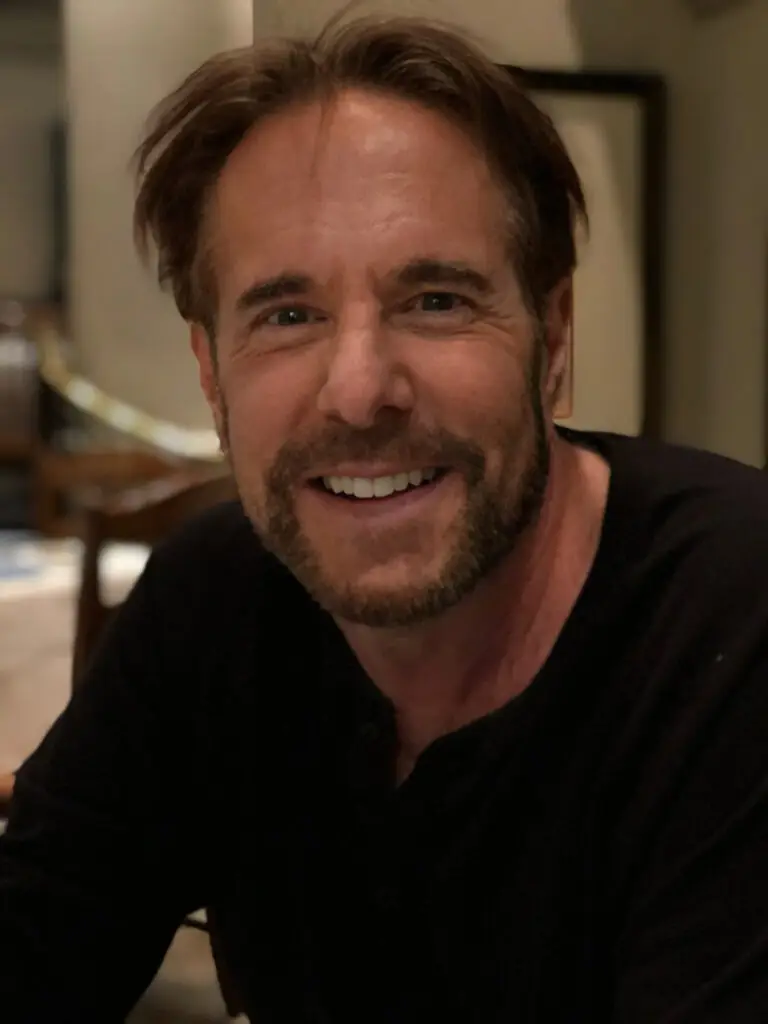
You will be working with Travis Atkinson, founder and director of the Schema Therapy Training Center of New York, who has spent decades developing and teaching this model.
I’m Travis Atkinson, and I began schema therapy training with Dr. Jeffrey Young in 1994. For close to two decades I worked alongside him at the Cognitive Therapy Center of New York, and together we built the first international courses in the model. Dr. Jeffrey Young and I co-created Schema Therapy for Couples.
In 2008, I co-founded the International Society of Schema Therapy. ISST named me an Honorary Life Member in 2020. I also co-authored the Schema Mode Inventory, used by clinicians internationally.
My certifications include Advanced Certified Schema Therapist, Supervisor and Trainer, and Certified Group Psychotherapist. I have been a Certified Gottman Method Couples Therapist since 2006. Sue Johnson trained and supervised me, and I am a Certified Emotionally Focused Couples Therapist and Supervisor. With her, I co-created the first EFT training video for gay and lesbian couples.
My couples work integrates schema therapy with Emotionally Focused Therapy for Couples. More than 100 clinicians have completed STTCNY coursework, and I remain as committed to teaching now as when I started, including helping colleagues think through comparisons such as Terry Real training versus schema therapy for couples when choosing how to deepen their work.
How do you apply for a humanitarian seat?
- Choose your track and cohort. Think about your caseload, your evenings, and the challenges most likely to affect attendance.
- Complete the application on our Tuition page. Tell us you live and practice in Ukraine, and describe your qualifications.
- Receive confirmation after acceptance. We confirm your eligibility and tuition before you enroll.
A new set of five seats opens with each cohort, in both tracks.
You do not need to solve every scheduling question before writing to us. Contact us about your circumstances, or start your application today.
What do Ukrainian clinicians ask most about humanitarian seats?
Do I have to live in Ukraine to qualify?
Yes. The seats are for clinicians currently living and practicing in Ukraine. Ukrainian clinicians based elsewhere can find the tuition for their country on our Tuition page.
Does the coursework make me ISST certified?
Not on its own. It fulfills the coursework requirement, and certification adds supervision, treated cases, recorded sessions, and a competency rating.
What if a siren interrupts a session?
Rejoin when you are safe, from wherever you are. Every session is recorded, and we will help you complete anything you missed.
Why does this matter to me personally?
I keep coming back to the same image from these cohorts. A camera returning from a shelter, a tilted frame, a clinician asking to go back to the chairwork.
Nobody speaks for a second. That second is me checking in. Then the demonstration starts again, because she asked it to, and because she taught me that carrying on is the help.
No one owes us an apology for being late during an air raid. Most of us will never learn what it costs to stay committed like that, week after week, to clients who need these clinicians more than ever.
On Thursday, Olena will sit across from a man whose silence is doing a job. The task is not to break it. It is to understand what the silence protects, and to help him find another way when he is ready.
Five seats are small beside what Ukrainian clinicians carry, and our cohorts are stronger for having them in the room. I remain committed to those seats, and we offer them with deep gratitude.
Travis Atkinson, LCSW, LICSW, Founder and Director, Schema Therapy Training Center of New York
Spring 2027 Schema Therapy for Individuals: Online Training
Interested in deepening your Schema Therapy practice?
Our Spring 2027 training is designed for clinicians who want practical, case-based learning they can integrate into their clinical work.