
Schema Therapy Case Conceptualization: A Clinician’s Guide to Formulation, Mode Mapping, and Treatment Planning
Nadia’s* thought record was perfect. Every column filled, every distortion named, the balanced thought written in neat block capitals. She held it up to the camera in our sixth session and said, “I know the thought isn’t true. I’ve known for years. It doesn’t change anything.”
There was a second problem with that thought record, and I didn’t see it until session nine. This guide to schema therapy case conceptualization is about how I found it.
A schema therapy case conceptualization is a written, collaborative account of why a client’s problems began and why they persist. It links present symptoms to unmet core emotional needs, early maladaptive schemas, coping styles, and schema modes, and then uses that map to choose interventions. It’s written for licensed clinicians treating chronic, personality-driven presentations, and for schema therapists preparing for ISST certification, where the conceptualization is submitted and rated. I began training with Dr. Jeffrey Young in 1994. In 2018, on ISST’s executive board, I interviewed Dr. Young and Jeff Conway about the case conceptualization form they had rebuilt.
Key Takeaways
- What it is: a developmental map from unmet needs to schemas, coping styles, and modes, tied to treatment goals.
- Why it matters: schema therapy focuses on the emotional dynamics under a symptom, and the map shows where to work.
- The surprise: the part of a client that looks healthiest is sometimes the part keeping the pattern alive.
Why do some clients understand their beliefs and still stay stuck?
Clients like Nadia stay stuck because insight and the pattern live in different systems. In the schema therapy literature, David Edwards notes that child modes are encoded in an implicational, episodic system. He describes it as biologically separate from the language-based explicit system where thought records do their work.
Nadia, 41, is a hospital pharmacist. She finished a solid course of cognitive behavior therapy two years ago and did every piece of homework. Her belief that she is not enough works more like a lens than a thought. It formed long before she had words for it.
The thought record answered whether the belief was true. It never asked what the belief was protecting.

What is a schema therapy case conceptualization?
A schema therapy case conceptualization is the clinician’s working theory of a client, built with the client and revised throughout treatment. It explains where a pattern began, which needs went unmet, how the child adapted, and which states now keep the pattern running.
The schema therapy model grew out of cognitive behavior therapy and blends it with attachment, Gestalt, object relations, and psychodynamic ideas. That integrative therapy heritage is why the schema therapy conceptualization has to hold so much at once: history, emotion, behavior, and the therapy relationship.
Young, who founded schema therapy, put it bluntly when I interviewed him: “If the case conceptualization is off, the treatment won’t work.” Without it, he said, you end up “randomly trying different techniques,” which is what schema therapy is not supposed to be. In his view, the conceptualization is what makes schema therapy a unified model in clinical practice and keeps it from becoming an eclectic one.
The Cambridge Guide to Schema Therapy treats case conceptualisation as a central task that comes before treatment begins. Its authors describe the work that follows as a kind of psycho-surgery. Interventions are tailored to the need that is active in the moment, and you can’t tailor without a map. Edwards argues that the modes and mode processes he catalogs are directly relevant to clinical practice and to conceptualizing complex psychological problems, such as those posed by personality disorders.
Why does a schema therapy case conceptualization work like a story?
A schema therapy case conceptualization works like a story because human beings understand a life as a chain of causes and effects. Will Storr makes this case in The Science of Storytelling. The brain builds a model of the world from countless observed causes and effects, and those small narratives become beliefs.
Storr’s account of character reads almost like a schema therapy assessment. A protagonist holds what he calls a theory of control: a belief about how to stay safe among other people. It usually forms through origin damage, an early event in which the belief worked. Because it worked, the character holds it sacred. Storr calls this the sacred flaw, and the plot exists to test it.
Schema therapy says the same thing in kinder language. Where Storr sees a flaw, schema therapy sees a child’s solution. An early maladaptive schema began as a reasonable adaptation to an unmet need, which is why clients defend it so hard.
Storr also explains why we keep reading. Stories open with unexpected change, and they hold us with gaps in what we know. A good schema therapy conceptualization uses both. It begins with the moment something stopped working, and it leaves the client wanting the next piece of the explanation.
How do core emotional needs become early maladaptive schemas?
Core unmet needs in childhood initiate the development of schemas. Young’s schema therapy model names five core emotional needs: secure attachment, autonomy and competence, freedom to express valid needs and emotions, spontaneity and play, and realistic limits and self-control. When temperament meets an environment that frustrates those needs, the child builds early maladaptive schemas.
These schemas are pervasive, self-defeating themes about oneself and relationships. Left untouched, unmet emotional needs can lead to chronic psychological problems in adults.
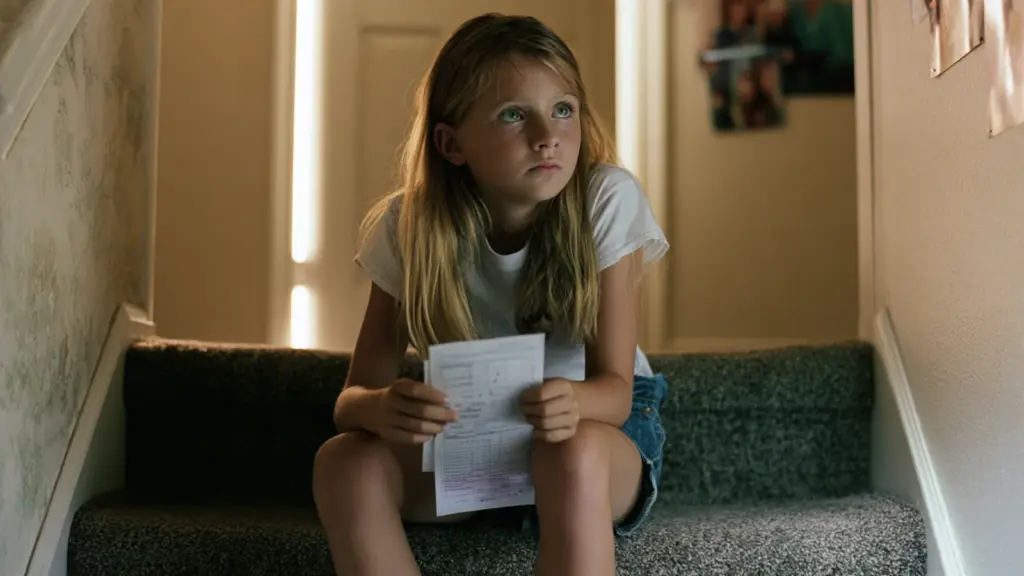
Nadia’s origin damage was quiet. Her father was ill for most of her childhood, and her mother worked nights. Nobody hit anybody. A nine-year-old learned that the safest child was the one who needed nothing, and her teachers praised her maturity. That was her theory of control. It worked beautifully, until it didn’t.
How do coping styles keep a schema alive?
Coping styles are the strategies a child develops to manage the distress a schema brings. There are three directions: surrender, avoidance, and overcompensation. They protect the child at the time and keep the schema intact later, because each one blocks the experience that might disprove it.
Precision matters here, because schema therapy trainees often blur three levels. The coping style is the direction. A coping response is the specific behavior. The coping mode is the state the person is in, which may or may not show as behavior at all.
Within the schema therapy framework, coping is never the enemy. It was the best a child could do. Young’s schema therapy model also links coping styles to schema perpetuation. A schema therapy case conceptualization identifies the triggers that activate each schema and the emotional responses that follow, so you can see the loop while it runs.
How did the mode model change schema therapy case conceptualization?
The schema therapy mode model shifted conceptualization from stable traits to moment-to-moment states. Schema modes are the emotional states and coping responses active in a client at a given moment. Schemas explained why clients with personality disorders suffered for decades. They couldn’t explain why the same client could swing from idealizing to raging in ten minutes.
Each mode has distinct subjectively experienced qualities. Edwards’ 2022 paper in Frontiers organizes the field under the widely accepted broad headings of Healthy Adult, Child modes, Parent modes, and coping modes. By his count, over eighty different modes have now been identified in schema therapy. He adds a further category, Repetitive Unproductive Thinking, for worry and rumination that never turn into a plan. Edwards argues that such covert behaviors play a significant role in amplifying distress and perpetuating problems.
Eighty modes would make an unreadable map. The ISST schema therapy case conceptualization form asks for the four most central schemas and has room for six schema modes. Arntz and Jacob describe specific mode models for various personality disorders, each one a starting point to adapt. Choosing is the skill.
Which child modes and healthy child modes belong on the map?
Child modes are the states closest to the original unmet need. Edwards describes eight distinct vulnerable child modes, including the Lonely Child, the Abandoned Child, the Rejected Child, and the Desperate Child. The Desperate Child carries little or no expectation that the pain will end. Lobbestael and colleagues added a humiliated and inferior child as a subtype.
The Angry Child sits here too, along with the healthy states: the Contented, Happy, Playful, and Creative Child. Edwards treats the Authentic Child as the central healthy child mode and quotes Winnicott: “Only the True Self can be creative.”
Edwards also describes how a backstage child mode can hide behind coping modes. A child seen in imagery may not be vulnerable at all; it may be a Coping Child, a young state already defending itself. Mistake a Coping Child for the Vulnerable Child, and rescripting goes strangely flat.
What do dysfunctional parent modes sound like?
These are internalized voices that attack, pressure, or reject the child. The voices Young’s original model called parent modes usually include the Punitive Parent and the Demanding Parent. In 2014, Farrell and colleagues called dysfunctional parent modes by that name. Edwards notes they are now often called inner critic modes.
Edwards cites a list of adjectives for dysfunctional or toxic parents that a child can introject. A Rejecting voice rebuffs the child’s attachment-seeking behavior, with an implicit or explicit message that the child is not wanted. Blended parent modes combine several of these voices.
Nadia’s critic was polite about it. “You should have handled this already.” It took her two months to tell me whose voice it was.
How do maladaptive coping modes hide the child?
Coping modes are states that protect against schema pain, and they come in three groups: Surrender, Detached/Avoidant, and Overcompensator. They develop around needs left unmet by toxic or neglectful parents. In adult life, those same coping modes interfere with getting the needs met. Not all coping modes fit comfortably in a single box, and the schema therapy literature keeps adding variants.
Surrender includes Edwards’ Compliant Surrender mode, the state Young named the Compliant Surrenderer. It also includes a Self-Pity/Victim mode and the Helpless Surrenderer, which can have a resigned or victim tone. On the detached side sits the Detached Protector. Edwards also lists the Detached Self-Stimulator, with its focus on risky and exciting behaviors.
Overcompensators range from the Bully and Attack mode to the externalizing Complaining Protector mode. The quietest one is the Perfectionistic Overcontroller. Edwards describes it as focused on getting things perfect to attain control and safety and to ward off misfortune and criticism. He notes that clinical perfectionism has long been recognized in cognitive behavior therapy, and that perfectionism can drive chronic anxiety and distress. A related state, the Eating Disordered Overcontroller, turns that control toward the body.

Where is the Healthy Adult in a schema therapy case conceptualization?
The Healthy Adult is the capacity schema therapy aims to strengthen, and Edwards describes it as a suite of modes. An important Healthy Adult function is executive: integrating the other modes. This part of the self can exercise self-control and shows practical problem-orientated behavior. From that position, other people are experienced as separate and independent centers of their own experience.
The trap is a client’s default mode. Modes that stay relatively stable over time are called default modes, and they can pass for personality. Edwards warns that a client’s default often looks like competence, but “this is often an Overcompensator and not the Healthy Adult.” Overcompensators can project the message, “I am a warm and balanced individual.”
Read that sentence again with Nadia in mind.
How do modes blend, sequence, and settle into default modes?
Real clients rarely respect the mode categories referred to above. The term blended modes refers to features of more than one mode appearing together, as when a client sounds angry and helpless in one sentence. Edwards notes that schema therapy authors refer to many blended child modes. He also describes mode suites, sets of modes that blend or sequence smoothly, and complex modes in which several submodes work together.
Mode sequences are where a schema therapy case conceptualization starts explaining behavior. A trigger activates a schema. Next, a Vulnerable Child state appears, an associated parent mode answers, and a coping mode follows. Edwards writes that identifying and naming modes alerts clinicians to schema perpetuation processes, and these mode processes are what you want on the page.
Primary emotions are adaptive responses to a real situation. Secondary emotions come from coping with, and blocking, a distressing primary one. Making the distinction between primary and secondary emotion is how you find primary child emotions under a flat surface.
A colleague offers to cover Nadia’s shift. Emotional Deprivation activates, and for one second the Lonely Child feels the offer land. The Demanding Parent answers at once. Then Nadia is in the Detached Protector: polite, flat, far away. She declines. The colleague stops offering, and the schema collects another piece of evidence.
How do you build a schema therapy case conceptualization with a client?
You build it by triangulating several sources of data across the assessment phase, then drafting it together. Schema Therapy Step by Step, by Remco van der Wijngaart and Marjolein van Wijk-Herbrink, treats case conceptualization and creating a mode model as separate chapters within the assessment phase.
The main schema therapy assessment sources, none privileged over the others:
- Clinical interview: presenting problems, goals, and earlier periods when the same pattern flared.
- Inventories as conversation: the Young Schema Questionnaire, the Young Parenting Inventory, and the Schema Mode Inventory, which I co-authored.
- Imagery for assessment: a recent upsetting episode first, then a bridge to an early memory.
- Diagnostic chairwork: giving a coping mode its own chair and asking what it protects.
- The therapeutic relationship: how the client responds to warmth, to a late start, to a limit.
Schema therapists identify and analyze schema modes and mode sequences as they appear, and they help clients recognize their default modes as coping mechanisms. That meta-awareness is part of the intervention in schema therapy’s integrative model for complex problems. Clients start to notice, “Oh. That’s the glass again.”
Expect the draft to change. Young gave me an example from his own thinking. He might start out sure a client’s core problem is abandonment, then discover defectiveness sits underneath it. “Defective people get left,” he said. Conway called the form “a living document” for that reason.
What does the ISST Case Conceptualization Form ask for?
The ISST form turns the schema therapy conceptualization into a structured document that certification evaluators rate. Applicants submit one form with each rated session recording: one for Standard certification and two for Advanced. Young explained to me that raters score three things: the form, the session, and the consistency between them. The form became mandatory on May 1, 2019, and ISST has accepted its newer 2023 form since July 1, 2024.
The backstory surprised me. Young said the 2008 original had almost nothing about modes and little about origins. Joan Farrell asked for a revision, and a six-person committee spent two years on it: both Jeffs, Poul Perris, Susanne Vind, David Edwards, and Vartouhi Ohanian. Two additions changed the form’s character. It now asks for the client’s strengths, and it asks for a concrete example at almost every step.
The 2018 edition holds a few surprises. Its mode section follows the widely accepted broad headings, with coping split three ways. It asks clinicians to describe life problems while trying to avoid schema terminology. Next come the four schemas most central to current problems, then modes by category: Vulnerable Child, other child modes, surrender, detached/avoidant, overcompensating, and dysfunctional parent. Every therapy objective asks how the Healthy Adult could change to meet it.
The section that unsettles trainees comes near the end. It asks about the therapist: your reactions to the patient, and which of your own schemas and modes are activated. That section, Young told me, “was never on the original form.” Short answers might take an hour. A thorough one, by his estimate, could easily take three, which is why thoughtful schema-focused therapy training programs build in plenty of practice with therapist self-reflection.
What happened when Nadia saw her mode map?
In session nine I shared my screen and started with the story, leaving the diagram for later. “Things weren’t easy for nine-year-old Nadia,” I began. Then her schema modes filled in the map: a Lonely Child at the center, a Demanding Parent above it, a Detached Protector around it.
Nadia corrected me twice. The critical voice belonged to her fourth-grade teacher. And the Detached Protector needed a better name. “It’s not a wall,” she said. “Glass. Everyone’s visible. I can’t feel any of them.”
The third mode was harder to say out loud. Her default coping mode, the one colleagues admired, was the Perfectionistic Overcontroller. I asked her to hold up the thought record again. Neat block capitals. Every column complete.
“I filled that in perfectly,” she said. “Of course I did.”
That was the second problem. The Overcontroller had done the homework. Nobody had invited the Lonely Child.
“The thought record was arguing with the wrong part of me, then.”

How does a schema therapy conceptualization set treatment objectives?
Therapeutic objectives derive from understanding schema modes. Schema therapy organizes treatment around strengthening the Healthy Adult and healing core unmet needs from childhood. The schema therapy conceptualization tells you which mode to address, which technique fits, and what the client needs from you.
| Conceptualization finding | Clinical question | Typical schema therapy direction |
|---|---|---|
| Vulnerable Child activated | Which need is active right now? | Limited reparenting, imagery rescripting |
| Punitive or Demanding Parent | Whose voice maintains the distress? | Chairwork to reduce the critic’s power |
| Detached Protector | What is being kept out of awareness? | Empathic confrontation, graded access to feeling |
| Overcompensating mode | What vulnerability sits underneath? | Mode awareness, observing the pattern in session |
| Compliant Surrenderer | Whose needs is the client meeting instead? | Replacing surrender with Healthy Adult assertion |
Schema therapists provide limited reparenting to address unmet childhood needs, and the specific need calibrates it. Conway framed it as parenting: “In order to be a good parent, one must understand their child.” Emotional Deprivation calls for different care than Enmeshment/Undeveloped Self. Clients improve as the Punitive Critic, the Cambridge Guide’s name for the Punitive Parent, loses power.
Schema therapists also help clients process distressing memories without flooding them. For Nadia, imagery rescripting would reach the child behind the glass, and chairwork would give the Demanding Parent a real opponent. First, though, the Overcontroller needed to agree to step aside.
Storr would recognize the moment. Every good plot eventually asks whether the protagonist will give up the sacred flaw. Nadia’s answer, for now, was a careful maybe.
Which schema therapy case conceptualization errors are most common?
The most common errors treat the conceptualization as a report to file away. These show up in experienced schema therapists too:
- Traits without states: schemas named carefully, but no schema modes, so shifts between sessions stay unexplained.
- Mistaking the default: reading an Overcompensator as Healthy Adult functioning.
- Flattening the blend: mapping single states when the client shows blended modes, mode suites, or complex modes.
- Missing the inner noise: rumination and worry go unrecorded, though such covert behaviors play a large part in maintenance.
- Leaving yourself out: no curiosity about which of your own schemas the client activates.

How does STTC teach schema therapy case conceptualization?
The Schema Therapy Training Center of New York (STTC) teaches case conceptualization within its online schema therapy certification training, the ST-I program. Every schema therapy technique, from imagery rescripting to chairwork and empathic confrontation, depends on knowing which mode you are working with and which need sits underneath.
I co-authored the Schema Mode Inventory and co-developed schema therapy for couples with Dr. Jeffrey Young. The schema therapy framework I teach treats the conceptualization as a story you build with the client, in their words.
Frequently Asked Questions
Is schema therapy case conceptualization only for personality disorders?
No. The schema therapy model was built for personality disorders and characterological problems, and Edwards presents it as relevant to conceptualizing complex psychological problems more broadly. Schema therapy clinicians use it wherever a pattern is long-standing and keeps returning, and many pursue ISST certification programs in schema therapy to deepen their work with these clients.
Does schema therapy case conceptualization help with anxiety disorders?
It can. With anxiety disorders, the conceptualization often finds a Perfectionistic Overcontroller or Repetitive Unproductive Thinking keeping the anxiety going. The schema therapy system then targets the need underneath the worry, and many clinicians seek schema therapist training toward ISST certification to use these tools more effectively.
How many schemas should a schema therapy case conceptualization focus on?
The 2018 ISST form asks for the four most central schemas, with space for others. Arntz and Jacob note that clients with severe personality disorders often score high on many schemas, so choosing matters, and many clinicians compare top schema therapy certification programs when deciding where to learn that skill.
Who can apply to STTC’s schema therapy training?
Licensed mental health professionals with a master’s degree or higher and current licensure can apply to the individual schema therapy training program. Clinicians join from many countries, and cohorts are capped at 20.
Young admitted to me that experienced therapists get complacent and believe they can do it all in their heads. Filling in the form for one client, he said, shows you what you don’t know. Every schema therapy conceptualization ends where the 2018 ISST form ends: with the therapist. If you want to learn to see the child behind the glass, and your own glass too, the next step is the application, including reviewing schema therapy training tuition options and considering advanced schema therapy for couples training if you work with partners.
Spring 2027 · Schema Therapy for Individuals
Learn to see the child behind the glass.
Fourteen live Thursdays. Twenty clinicians, at most. You bring the client whose insight never turned into change, we map the modes together, and you leave each week with something to try in your next session. Applications for the January cohort are open now.
Thursdays, 11:00 a.m. to 2:00 p.m. ET | January 21 to May 20, 2027 | Live on Zoom
*Nadia is a teaching case I created for this article, not a real client.
Spring 2027 Schema Therapy for Individuals: Online Training
Interested in deepening your Schema Therapy practice?
Our Spring 2027 training is designed for clinicians who want practical, case-based learning they can integrate into their clinical work.