ISST Certification in Schema Therapy: What It Actually Takes

You know the clients who keep you up at night. The ones who intellectually understand their patterns but cannot stop repeating them. The couple stuck in the same fight for years, each triggering the other’s deepest wounds. The high-functioning professional who sees the pattern clearly and cannot break it. These are the clients schema therapy was built for, and ISST certification confirms your competence to serve them.
This guide covers everything licensed therapists need to know about certification through the International Society of Schema Therapy: ISST requirements for Individual and Couples certification at both Standard and Advanced levels, supervision sessions, session recordings, costs, and how to choose a training program that positions you for clinical excellence.
STTC Schema Therapy Training at a Glance
- Individual Training: 42 hours over 14 weeks (exceeds ISST’s 40-hour requirement)
- Couples Training: 33 hours over 11 weeks (exceeds ISST’s 30-hour requirement)
- ISST-approved for Standard and Advanced certification in both individual schema therapy and couples schema therapy
- Live, small-cohort, weekly online sessions with experiential practice, role plays, and real-time feedback
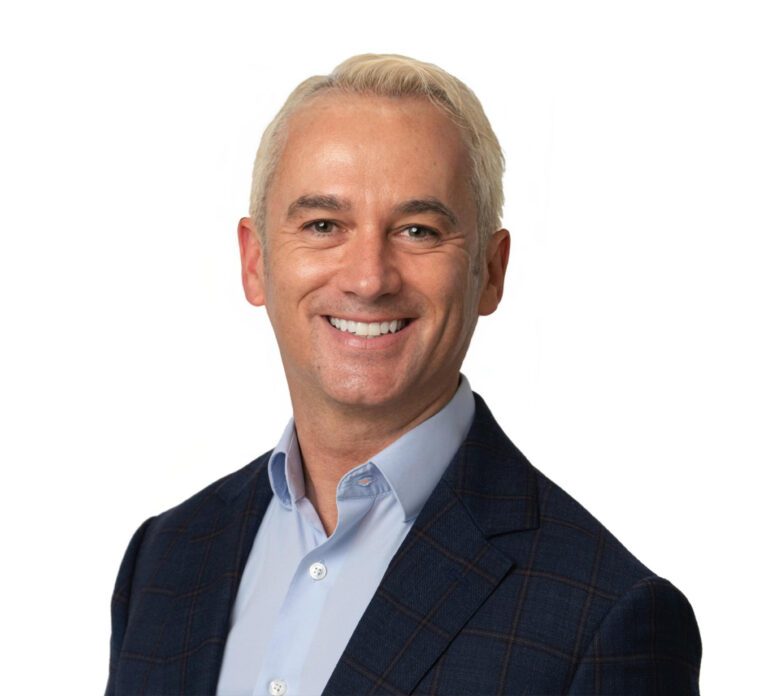
- Led by Travis Atkinson: Advanced Certified Schema Therapist, Supervisor, and Trainer for both Individuals and Couples. Described by ISST as one of the founding members and an Honorary Life Member of the International Society of Schema Therapy. Certified Emotionally Focused Couples Therapist and Supervisor. Certified Gottman Method Couples Therapist.
- World Bank-based tuition tiers for global accessibility, a rare structure among ISST-approved certification training programs

Why Schema Therapy Matters for Personality Disorder Treatment in 2026
Schema therapy emerged from Jeffrey Young’s recognition that standard cognitive therapy fell short with certain populations. Clients with personality disorder features, chronic depression, and deeply entrenched relational patterns needed something more. The model he developed addresses characterological difficulties through a framework that integrates cognitive, behavioral, attachment, and experiential approaches.
The evidence base has matured considerably. Further details can be found in the Giesen-Bloo et al. (2006) randomized trial demonstrated that schema therapy outperformed transference-focused psychotherapy for borderline personality disorder on recovery rates, symptom reduction, and treatment retention. A 2023 network meta-analysis by Yakın et al. in Psychotherapy and Psychosomatics found schema therapy to be one of the more effective approaches for personality disorders, with outcomes that compared favorably to other specialized modalities such as DBT and mentalization-based treatment.
For therapists working with complex individual and couple cases, schema therapy provides conceptual clarity. Mode work offers a language for the rapid state shifts that characterize personality pathology. Schema identification explains why intelligent clients repeat self-defeating patterns. Limited reparenting provides a framework for the corrective emotional experiences these clients need.

The International Society of Schema Therapy: Setting Global Standards
The International Society of Schema Therapy (ISST) establishes the international benchmark for schema therapist training and certification. Founded in 2008, the International Society of Schema Therapy brings together clinicians, researchers, and trainers committed to evidence-based practice and professional standards.
ISST certification signals competence verified through rigorous evaluation. Certified schema therapists can list themselves on the ISST website, access the ISST referral network for patient requests globally, and represent themselves as qualified practitioners to clients and colleagues. For mental health professionals serious about this work, certification provides professional recognition that crosses international borders.
Benefits of Listing on the ISST Website as a Certified Schema Therapist
Once certified, you gain a listing on the ISST website’s searchable directory. Potential clients and referring professionals can locate qualified practitioners in their region. This visibility generates referrals, particularly in markets where recognition of schema therapy is growing. Many certified professionals report that the ISST website listing becomes a meaningful source of appropriate referrals.
The International Society of Schema offers certification across multiple specialty areas: Individual Schema Therapy, Couples Schema Therapy (ST-C), Group Schema Therapy, and Child-Adolescent Schema Therapy. Each area has distinct training requirements and evaluation criteria. This guide focuses on Individual and Couples certification, the two pathways STTC supports.

Why Train with STTC and Travis Atkinson for Your Schema Therapy Certification
Lineage and Authority in the Schema Therapy Community
Travis Atkinson began his schema therapy training with Jeffrey Young in 1994, while still in graduate school, and joined the Cognitive Therapy Center of New York as a staff clinician in 1998. Working closely with Jeffrey Young, Travis played a leading role in the development of schema therapy for couples as a distinct certification track, later chairing the Schema Therapy for Couples Special Interest Group and the ST-C Committee that established the official training criteria and curriculum. His work sits at the intersection of theory, research, and clinical application.
Within the International Society of Schema Therapy, Travis has held leadership positions spanning nearly two decades. He chaired the Schema Therapy for Couples Special Interest Group, then the Schema Therapy for Couples Committee. He served on the ISST Executive Board as Public Affairs/Media Coordinator from 2014 to 2020. In October 2020, the ISST approved his nomination as Honorary Life Member, recognizing his sustained contributions to schema therapy development and dissemination.
Travis currently serves as Vice President of Media for the Jeffrey Young Schema Therapy Association (JYSTA), helping preserve and expand Jeffrey Young’s legacy. The first JYSTA symposium, held in December 2025, drew nearly 400 participants from around the globe, reflecting both the vitality of the model and the international reach of the training community.
Credentials Across Modalities
His certifications span both individual and couples work:
- Advanced Certified Schema Therapist (Individual)
- Certified Schema Therapy Supervisor and Trainer (Individual)
- Advanced Certified Schema Therapist (Couples)
- Certified Schema Therapy Supervisor and Trainer (Couples)
Beyond schema therapy, Travis completed eight years of training with Sue Johnson, achieving certification as an Emotionally Focused Couples Therapist and Supervisor. Eight years of training with the Gottman Institute resulted in certification as a Gottman Method Couples Therapist. This integration shapes STTC’s couples curriculum, bringing coherent relational frameworks rather than eclectic technique borrowing.
When you train here, you learn from someone who helped build the model and who continues to carry the experiential heart of this work forward.

Program Credentials That Meet and Exceed ISST Requirements
ISST Requirement | STTC Delivers |
Individual: 40 hours minimum | 42 hours of coursework |
Couples: 30 hours minimum | 33 hours of coursework |
ISST approval for certification | Full approval for Standard and Advanced, Individual and Couples |
Experiential training components | Weekly role plays, live demonstrations, real-time feedback |
Those extra hours are not filler. They are where the model starts to click, your clinical judgment sharpens, and you build relationships with colleagues who become part of your professional life long after the training ends.
ISST Certification Requirements: Individual Schema Therapy
The ISST defines clear requirements for Individual Schema Therapy certification at two levels: Standard Level Certification and Advanced Level Certification. These requirements reflect ISST’s published standards as of 2026; always confirm current details on the ISST website (schematherapysociety.org) before applying.
Understanding these ISST requirements helps you plan your timeline, select appropriate supervision, and prepare your session recordings for evaluation. Note that the time limits below (3 years, 5 years) are outer boundaries set by ISST, not typical completion times. Motivated practitioners with a steady stream of appropriate cases often complete Advanced Certification within 1.5 to 2 years of finishing coursework.
Standard Certification in Individual Schema Therapy
Academic eligibility: Applicants must hold at least a master’s degree (or national equivalent) in a mental health field that allows independent clinical practice, such as clinical psychology, psychiatry, clinical social work, or counseling. Those interested in schema therapy certification programs can explore options to advance their professional qualifications.
ISST membership: All applicants must be ISST members when applying for certification. Your ISST member number is required on all application forms.
Approved training hours: Minimum 40 hours of ISST-approved individual schema therapy training. STTC provides 42 hours.
Supervision sessions: Minimum 20 hours of individual or group supervision with an ISST-certified Schema Therapist Supervisor, spanning at least one year from the start of training. In the United States, these are often called “educational consultations” for licensing purposes.
Recorded session review by supervisor: Your supervisor must review approximately 2 hours of recorded schema therapy sessions (from about 2 sessions), separate from supervision time.
Clinical cases: At least 2 individual schema therapy cases with a minimum of 25 therapy hours each. Candidates must have access to clients appropriate for schema mode work due to complication, chronicity, treatment resistance, or relapse.
Session recordings for independent rating: 1 recorded individual session submitted with case conceptualisation. The session must be appropriate for mode work and show emotion-focused change techniques (imagery rescripting or mode dialogues in chairs).
Independent rater evaluation: The recorded session must be rated by an independent Advanced Schema Therapist or Trainer using the Schema Therapist Competency Rating Scale (STCRS).
Minimum competency score: Average score of 4.0 or higher on the STCRS, including Item 11 (emotion-focused change techniques), showing adequate use of imagery rescripting or mode dialogues.
Time limits: Applicants must apply for Standard Certification within 3 years of completing basic training.
Advanced Certification in Individual Schema Therapy
Therapists pursuing Advanced Certification build on the Standard requirements with additional supervision, cases, and more rigorous evaluation.
Academic eligibility and ISST membership: Same as Standard Certification.
Approved training hours: Same 40 hours (no additional coursework required beyond Standard). STTC’s 42 hours cover both levels.
Supervision sessions: Minimum 40 hours of supervision, spanning at least one year. This can be built directly on the advanced track or by adding 20 more hours after achieving Standard status.
Recorded session review by supervisor: Supervisor must review approximately 4 hours of recorded sessions (about 4 sessions), separate from supervision time.
Clinical cases: At least 4 individual schema therapy cases (2 more than Standard) with a minimum of 25 therapy hours each. At least one case must involve a client with a personality disorder or significant personality disorder features. Others must meet mode-work criteria due to complexity, chronicity, treatment resistance, or relapse.
Session recordings for independent rating: 2 recorded individual sessions from 2 different patients, each submitted with case conceptualisation.
Independent rater evaluation: The two recordings must be rated by two different independent raters.
Minimum competency score: Average score of 4.5 or higher on the STCRS across both rated sessions. At least one session must show high-level imagery rescripting or mode dialogues for change (Item 11 score of 4.0 or higher).
Time limits: If pursuing the two-step path (Standard then Advanced), applicants must complete Advanced requirements within 2 additional years (total 5 years from the end of training). Alternatively, therapists can pursue Advanced directly with 40 hours of supervision and 2 qualifying recordings.
Privileges: Advanced Certification allows therapists to provide supervision for trainees pursuing their own certification, develop ISST-approved certification training programs, and contribute to clinical research.

ISST Certification Requirements: Schema Therapy for Couples (ST-C)
Schema Therapy for Couples (ST-C) is a specialty certification that sits alongside (not on top of) individual schema therapy certification. You do not need an individual certification to pursue ST-C, but you must meet the same ISST eligibility requirements (master’s degree, licensure, and ISST membership). The 2017 ST-C specialty guidelines govern these requirements.
These Schema Therapy for Couples (ST-C) requirements reflect ISST’s published standards as of 2026; always confirm current details on the ISST website (schematherapysociety.org) before applying.
Like Individual certification, ST-C offers Standard and Advanced Level Certifications.
Standard Certification in Couples Schema Therapy (ST-C)
Academic eligibility: Same as Individual certification. Applicants must be eligible for ISST certification under their national rules as independent psychotherapists.
ISST membership: Required at application, same as Individual certification.
Approved training hours: Minimum 30 hours of ISST-approved Schema Therapy for Couples training. This training must cover all official ST-C curriculum modules, including mode cycle assessment, limited reparenting in the couples context, and experiential couples interventions. STTC provides 33 hours of coverage across all required modules.
Supervision sessions: Supervised work with schema couples under an ISST-certified Schema Therapist Supervisor/Trainer for Couples (ST-C). This is a specific credential; an Individual track supervisor does not qualify for ST-C supervision. Hours typically mirror individual requirements (around 20 for Standard).
Recorded session review by supervisor: Your ST-C supervisor must review a couple of recorded sessions demonstrating mode-cycle work and intervention. Programs usually require at least 2-3 full couple sessions for Standard.
Clinical cases: Minimum of 2 schema therapy couples cases with entrenched mode cycles and significant relational dysfunction (high conflict, attachment injuries), following ST-C criteria.
Session recordings for independent rating: 1 recorded couple session plus case conceptualisation, showing ST-C mode assessment and intervention.
Independent rater evaluation: Recordings must be evaluated against the Schema Couples Therapy competency framework by ST-C trainers or supervisors designated as independent raters. The rater must hold ST-C credentials.
Minimum competency rating: Couples’ competency scales mirror individual STCRS principles, requiring demonstration of key ST-C skills: mode cycle mapping, limited reparenting in the relationship, and experiential interventions.
Time limits: ST-C follows the same general timing rules as individual certification: 3 years to the first certification level.
Advanced Certification in Couples Schema Therapy (ST-C)
Academic eligibility and ISST membership: Same as Standard ST-C.
Approved training hours: Same 30 hours (no additional coursework required beyond Standard). STTC’s 33 hours cover both levels.
Supervision sessions: More extensive supervision (often 40 hours total) with an ISST-certified ST-C Supervisor/Trainer, following the 2017 ST-C guidelines.
Recorded session review by supervisor: A more extensive recording review is expected, showing multiple sessions with assessment and change work.
Clinical cases: Several schema couples demonstrating full use of the ST-C model. At least one case must show significant personality- or mode-driven complexity (not merely high conflict), such as a couple in which one or both partners have personality disorder features that drive entrenched mode cycles.
Session recordings for independent rating: 2 recorded couple sessions (usually from 2 different couples) plus case conceptualizations, demonstrating core ST-C competencies.
Independent rater evaluation: Two recordings rated by qualified ST-C independent raters. Standards parallel the individual advanced process in requiring high-level competency.
Minimum competency rating: Higher threshold ratings on ST-C competency measures, demonstrating advanced use of mode-cycle work, experiential interventions, and therapist stance across couple sessions. For information on training opportunities and tuition to further develop your schema therapy competencies, see our roundup of schema therapy certification online courses for 2026-2027.
Time limits: Must meet Advanced requirements within ISST time frames (5 years total from end of training if pursuing Standard then Advanced) or follow extension pathways.
Privileges: Advanced ST-C certification allows therapists to supervise couples trainees and potentially train others in the ST-C model.

Quick Reference: ISST Certification Requirements Summary
Requirement | Individual Standard | Individual Advanced | Couples Standard | Couples Advanced |
Training hours | 40 minimum | 40 (same) | 30 minimum | 30 (same) |
STTC provides | 42 hours | 42 hours | 33 hours | 33 hours |
Supervision hours | 20 (over 1+ year) | 40 (over 1+ year) | ~20 | ~40 |
Clinical cases | 2 cases, 25+ hrs each | 4 cases (1+ with PD) | 2 couples | Several (1+ complex) |
Rated recordings | 1 session | 2 sessions, 2 patients | 1 couple session | 2 couple sessions |
Competency minimum | STCRS 4.0 | STCRS 4.5 | ST-C equivalent | Higher threshold |
Time limit | 3 years | 5 years total | 3 years | 5 years total |
The Application Process: What Applicants Need to Submit
Applications for ISST Certification follow a structured process for both the Individual and Couples pathways:
1. Maintain ISST membership with current membership fees paid
2. Complete application forms with your ISST member number
3. Submit required documentation, including case conceptualisation forms, session summary reports, and session recordings
4. Regional coordinator review: Your regional coordinator or national coordinator reviews all materials
5. Independent rater evaluation: An independent rater (or two for Advanced) scores your session recordings (individual training program) using the STCRS or ST-C competency framework
6. Final evaluation by the ISST certification coordinator
All required documentation must be in English if your regional coordinator is not fluent in your language. Applicants should submit all materials together to avoid processing delays. Your regional coordinator reviews materials and, if they qualify, submits materials to the ISST coordinator for final review and decision.
ISST Membership Requirements: Becoming an ISST Member
All applicants for certification must be ISST members before submitting applications. You can join through the ISST website at schematherapysociety.org. Full membership provides your ISST member number, which is required on all application forms. All applicants must maintain membership. For those interested in the supervision process as part of certification, you may find this resource on Schema Therapy Supervision Challenges helpful.
Beyond certification, ISST membership connects you to the global schema therapy community. Members access continuing education workshops, research updates, and networking opportunities with certified professionals worldwide. Membership fees support the society’s work in maintaining training standards and advancing schema therapy research.
Extensions and Time Limits
Extensions beyond deadlines require proof of ongoing engagement: at least 6 hours per year of additional ISST-level training or supervision, or case presentations in ISST groups. The same extension rules apply to both the Individual and the Couples certification pathways.
A Note on Legacy Requirements
ISST maintains different requirement pages for clinicians who started schema therapy training before specific cutoff dates (such as the September 2021 changes for Individual certification). If you began training prior to those changes, check which requirement set applies to you on the ISST website. The requirements described in this guide reflect the current standards for those beginning training in 2026.

How Weekly Training Workshops Beat Weekend Intensives
Many certification training programs compress coursework into intensive weekend workshops. The appeal is obvious: complete your hours quickly and move on. But cognitive science suggests this approach sacrifices retention for convenience.
The spacing effect, first documented by Ebbinghaus in 1885, demonstrates that distributed practice produces stronger long-term retention than massed practice. Baddeley and Longman’s 1978 study of postal workers learning to type found that those who trained in shorter, spaced sessions outperformed those in intensive workshops, even when total training hours were identical.
A 2024 meta-analysis by Latimier et al. in Educational Psychology Review confirmed these findings across educational contexts, reporting a meaningful advantage for spaced over massed learning.
STTC structures training as weekly sessions across 14 weeks for individual schema therapy and 11 weeks for couples work. Between sessions, you practice techniques with actual clients, encounter real clinical challenges, and return with questions grounded in experience. This integration of learning and practice mirrors how expertise develops in practice.
Weekend intensive workshops deliver information efficiently. Spaced learning builds skill.

Value Comparison: Why STTC for Your Certification Training
Tuition That Reflects Our Values
Many ISST-approved schema therapy certification training programs charge $3,000 to $6,000 or more for coursework alone, before supervision costs needed to meet supervision requirements. STTC keeps tuition accessible for most trainees and can take into account extraordinary circumstances.
Individual Training (Category A / High Income Countries):
$1,695 one-time (discounted), or four installments of $465
Couples Training (Category A / High Income Countries):
$1,295 one-time (discounted), or four installments of $330
The one-time payment offers a discount compared to the installment total. Choose the option that works for you.

Global Accessibility: World Bank Tiered Tuition
STTC adjusts tuition based on World Bank income categories, determined by your country of residence at the time of the program. This structure is rare among ISST-approved programs. Your country’s economy should not determine whether you can afford to become a schema therapist.
Individual Training by Category:
- Category A (High Income): $1,695 one-time or $465 x 4
- Category B: $1,195 one-time or $335 x 4
- Category C: $750 one-time or $225 x 4
- Category D (Low Income): $495 one-time or $150 x 4
Humanitarian exception: Due to the ongoing Russian invasion, residents of Ukraine qualify for Category C rates regardless of World Bank classification.
We structure tuition this way because we value participation from a global community. Clinicians from different countries, cultures, and practice contexts enrich every cohort. Schema therapy is a global movement, and our training reflects that. We continue workshops for alumni to help them grow and expand their schema therapy skills and techniques.
Proof of residency required for Categories B through D. Tuition is current as of January 2026.

Frequently Asked Questions About ISST Certification and Schema Therapy Training
How long does it take to become an ISST certified schema therapist?
It depends on your caseload and pace. Motivated practitioners with a steady stream of appropriate cases can typically complete Advanced Certification within 1.5 to 2 years of finishing coursework. Standard Certification can be achieved even faster. The 3-year and 5-year ISST time limits are outer boundaries, not typical timelines. Most motivated therapists finish well before those limits. The key variables are caseload size, supervision scheduling, and how quickly you can prepare session recordings for evaluation.
What does ISST certification cost in total?
Total costs include training program tuition, supervision sessions, independent rater fees for session recordings evaluation, and ISST membership fees. Training costs vary by program. STTC’s Individual training is $1,695 (Category A). Supervision rates vary by supervisor. STTC does not control supervision rates, as each supervisor sets their own fees. We encourage trainees to locate a supervisor who meets their needs and budget. ISST membership fees are approximately £90 annually. STTC workshops in schema therapy are optional, not part of ISST’s requirements.
Can I pursue both Individual and Couples certification?
Yes. Many therapists complete Individual certification first, then add Couples certification. The coursework is separate (42 hours for Individual, 33 hours for Couples), and each pathway has its own supervision and case requirements. Some therapists pursue both simultaneously if their caseload includes both individual clients and couples appropriate for schema work.
Do I need Individual certification before pursuing Couples certification?
No. The ISST treats Individual and Couples as separate specialty tracks. You can pursue Couples certification without Individual certification if your practice focuses on couples work. You can also take STTC’s Couples training without having completed Individual training. However, many therapists find the Individual training provides a foundational understanding that enriches their couples work, so completing both is common.
Can I take the training even if I’m not sure I’ll pursue certification?
Yes. Many therapists attend our programs for professional development and skill-building without immediate plans for certification. The training has value in its own right. You can always decide to pursue certification later if your practice evolves in that direction.
Can I pursue certification if I work outside the US?
Yes. The International Society of Schema Therapy operates globally, with regional coordinators across continents. STTC’s online format serves therapists in over 30 countries. World Bank-based tuition tiers make training accessible regardless of economic context.
Do I need access to clients with borderline personality disorder to enroll?
No. You do not need any specific caseload to enroll in STTC’s training programs. However, to eventually pursue certification, you will need access to clients suitable for schema mode work, as defined by ISST: clients whose difficulties reflect complication, chronicity, failure to respond to treatment, or relapse rather than circumscribed, brief problems. For Individual certification, borderline personality disorder is common in schema therapy caseloads, but narcissistic, avoidant, dependent, and other personality presentations also qualify. The key is characterological complexity, not a specific diagnosis. For Couples certification, you need couples with entrenched mode cycles and significant relational dysfunction. Many therapists complete training first and then build an appropriate caseload over time.
What if I cannot complete certification within the time limits?
Extensions may be granted with documentation of continuing professional development: at least 6 hours per year of additional ISST-level training, supervision sessions, workshops, or case presentations. Contact your regional coordinator to discuss options before time limits expire.

Your Next Steps: From First Session to ISST Certification
Current Cohorts
- Spring 2027 Individual Schema Therapy Training: Starts January 21st, 2027. Now enrolling.
- Fall 2026 Individual Schema Therapy Training: Starts September 10th. Now full.
SOLD OUT! APPLY NOW TO SPRING 2027 - Fall 2026 Couples Schema Therapy Training: Starts September 23rd. Now enrolling.
Every individual schema therapy cohort has sold out over the last several years. Couples schema therapy cohorts fill quickly as well.
What Happens After Coursework
Coursework is just the first step. From there:
- Build your caseload: Identify clients appropriate for schema mode work
- Begin supervision: Connect with an ISST-certified supervisor for your track (Individual or Couples). Please note that in the US, supervision is referred to as Educational Consultation.
- Complete required cases: Treat 2 cases (Standard) or 4 cases (Advanced) for Individual; 2+ couples for Couples certification
- Prepare recordings: Select your best sessions demonstrating key competencies
- Submit for rating: Independent raters evaluate your session recordings. When all requirements are met, the submission is forwarded to the ISST Certification Coordinator
- Receive certification: Join the ISST directory and referral network
Throughout each stage, STTC supports you. We can help connect you with supervisors and provide guidance on the certification process.
Beyond certification, the path continues. Over time, you can become a supervisor yourself. Eventually, you may step into the role of trainer. There are also options for fast tracking your certification, depending on your level of expertise and caseload available. It is a real professional pathway with clear expectations and meaningful standards. Because of that structure, the credential carries real weight.
The clients who brought you to this page deserve a therapist equipped with these tools.

Spring 2026 Schema Therapy for Individuals: Online Training
Interested in deepening your Schema Therapy practice?
Our Spring 2026 training is designed for clinicians who want practical, case-based learning they can integrate into their clinical work.