Jeffrey Young’s Schema-Focused Therapy: The Eighteen Patterns Behind the Symptoms

The patient could recite his cognitive distortions like a catechism. He knew his thoughts were “all-or-nothing.” With precision, he could identify the evidence against his belief that he was fundamentally unlovable. In session, he would nod and say, “You’re right, that’s not rational.” Then he would go home, and within three days the same crushing certainty would return: something was wrong with him at his core, and eventually everyone would see it.
Jeffrey Young, the American psychologist born on March 9, 1950, kept encountering versions of this patient at the Center for Cognitive Therapy with Aaron Beck in the 1980s. The standard interventions worked beautifully for many people. But a stubborn subset remained stuck, their intellectual insight floating above an emotional conviction that nothing could seem to touch. Schema therapy grew out of Jeffrey Young’s attempt to answer one question: What do you do when a patient knows the thought is distorted but still believes it in their bones? He is best known for having developed schema therapy, an approach that has since helped countless clients find hope when other treatments have failed.
From Yale to the Schema Therapy Institute
Jeffrey Young obtained his undergraduate degree at Yale University, earned his PhD in clinical psychology, and pursued postdoctoral studies with Aaron Beck at the University of Pennsylvania. His own experience seeking therapy for personal challenges during this period shaped his understanding of deep emotional issues. It influenced his conviction that therapists must understand their own patterns to be effective.
Young is the founder of the Schema Therapy Institute, where he developed and refined the model that would become schema therapy, later establishing the Cognitive Therapy Center in New York to apply and teach it. Young has written numerous books on the subject, including his two most famous books, “Schema Therapy: A Practitioner’s Guide” and “Reinventing Your Life.”
These influential works have been translated into multiple languages and remain core references for clinicians and the general public seeking to understand this approach.
The model Jeffrey Young developed rests on four central pillars: core emotional needs that all children require for healthy development, early maladaptive schemas that form when those needs go unmet, coping styles that people develop to manage schema activation, and schema modes that capture the shifting emotional states people experience moment to moment. Understanding how these four constructs interact provides the foundation for assessment and treatment planning in schema therapy.
This guide explores the key concepts that define Jeffrey Young’s contributions to psychotherapy. For clinicians considering training in this model, understanding these foundational ideas provides essential context for evaluating whether schema therapy fits your clinical work.
Key Takeaways of Jeffrey Young: Schema-Focused Therapy
- Jeffrey Young’s professional journey and his dissatisfaction with standard CBT when treating patients with entrenched characterological patterns
- The four pillars of schema therapy: core emotional needs, early maladaptive schemas, coping styles, and schema modes
- Early maladaptive schemas, as Jeffrey Young conceptualized them, including the five domains of unmet childhood needs that form the foundation of clinical assessment
- Coping styles that maintain schemas: surrender, avoidance, and overcompensation
- Schema modes that Jeffrey Young identified, especially the Vulnerable Child, Punitive and Demanding Parent modes, Detached Protector, and Healthy Adult
- Who benefits most from schema therapy, and when to consider this approach as your primary treatment model
- Core techniques Jeffrey Young developed or formalized within this model: limited reparenting, imagery rescripting, mode dialogues, and behavioral pattern-breaking
- How Jeffrey Young’s integrative stance differs from traditional CBT, psychodynamic approaches, EFT, and ACT
- Getting started clinically with concrete next steps for integrating schema therapy concepts into your current practice

The Foundations of Schema Therapy: Jeffrey Young’s Professional Journey
Consider a patient we will call Daniel: a 38-year-old attorney with chronic depression who had completed two courses of CBT with competent therapists. He could identify his automatic thoughts with precision. He understood that his belief in his own defectiveness was a cognitive distortion rooted in a critical father. None of this knowledge had made him feel any different. By the time patients like Daniel arrive in our offices, their patterns have been running so long that they feel like personality, not learning.
Jeffrey Young observed that patients with personality pathology and chronic depression often showed this exact presentation: intellectual insight without emotional shift. He faced significant challenges with patients who did not respond to standard CBT, and his attitude toward these clinical puzzles was marked by openness and curiosity rather than frustration. During this period, the book “Cognitive Therapy and Emotional Processing” by Guidano and Liotti informed some of his thinking about how early experience shapes core beliefs at a level deeper than surface cognitions.
Why Jeffrey Young Grew Dissatisfied with Traditional CBT
Young noticed a troubling pattern among long-term patients throughout his clinical work. They would acknowledge that their thoughts were distorted yet remain emotionally convinced of their core beliefs. A patient like Daniel might say, “I know I’m not worthless,” and feel, in his chest, that he absolutely was.
This disconnection pointed to deeper structures that require different interventions. Jeffrey Young, developer of Schema Therapy, observed that many patients harbor deep themes they are unaware of, themes that shape their relationships throughout life without ever being named. Standard cognitive restructuring rarely touched these underlying patterns. Daniel might successfully challenge a negative automatic thought on Tuesday and find the same emotional conviction returning by Friday.
Young’s solution was to develop a model that directly targeted these deeper structures. Rather than focusing primarily on surface-level cognitions, schema therapy addresses the core beliefs and emotional patterns that generate distorted thoughts. The automatic thought is the smoke; Jeffrey Young wanted to find the fire.
How Jeffrey Young Integrated Multiple Therapeutic Traditions
Drawing on his clinical experience and theoretical studies, Jeffrey Young developed schema therapy by selectively incorporating elements from several traditions. Schema therapy is characterized as truly integrative, using a broader range of techniques compared to other therapies. From attachment theory and attachment science, he took the understanding that early caregiver relationships create templates for how we expect all relationships to go. Psychodynamic methods contributed the concept of working with childhood origins and using the therapeutic relationship itself as a vehicle for change.
Gestalt therapy provided experiential techniques, such as chair work and imagery, to access emotional material that talking alone could not reach. Emotionally focused approaches informed the emphasis on processing emotion rather than merely discussing it. Cognitive-behavioral strategies provided structure for modifying behavioral patterns and testing beliefs against reality.
Jeffrey Young has emphasized that therapists should be personally affected by schema therapy to become excellent practitioners. He often told trainees that if schema therapy does not change how you see yourself, you probably have not let it in deeply enough. When interviewed about this conviction, Young has explained that genuine therapeutic presence requires self-awareness about one’s own schemas. Therapists who understand their own patterns can better attune to patients and avoid schema-driven countertransference responses. This passion for authentic therapeutic connection distinguishes his teaching from more technique-focused approaches.
Who Benefits Most from Schema Therapy? Private Practice?
Schema therapy was developed specifically for patients who do not respond adequately to standard short-term treatments. Research has demonstrated its effectiveness across several challenging clinical presentations, with strong evidence for borderline personality disorder. Multiple randomized controlled trials, several with three-year follow-up data, have shown significant improvements in symptoms, functioning, and quality of life that persist well beyond treatment termination. Even in the most challenging cases, patients can make significant progress over time. The model has also shown promise for chronic depression, other personality disorders, and complex trauma presentations.
Clinical Indications for Schema Therapy
Schema therapy is particularly indicated when patients present with:
- Chronic, treatment-resistant depression that has not responded to standard CBT or medication, especially when depression appears linked to longstanding interpersonal patterns or characterological features
- Personality pathology, including borderline, narcissistic, avoidant, and dependent presentations, where the severity and pervasiveness of patterns require longer-term, relationally-focused work
- Complex trauma and early attachment disruption, particularly when patients show difficulty trusting therapists, maintaining emotional regulation, or forming stable relationships. For more resources related to schema therapy and professional development, see the Bank of England Museum – Schema Therapy Training Center.
- Entrenched interpersonal difficulties that repeat across multiple relationships and contexts despite the patient’s insight into the patterns
- CBT non-responders who can identify and challenge cognitive distortions intellectually but remain emotionally stuck, suggesting deeper schema-level structures need addressing
- Patients in crisis whose acute distress connects to longstanding characterological issues that will require extended treatment after stabilization
When Schema Therapy May Not Be the Primary Model
Not every patient requires schema-level work. Patients with circumscribed anxiety disorders, acute adjustment difficulties, or specific phobias often respond well to shorter-term, symptom-focused interventions. Schema therapy’s longer treatment duration and intensive relational focus represent significant time and resource commitments that should be reserved for patients who genuinely need this depth of work. Clinicians in private practice must balance the commitment schema therapy requires against other demands on their caseload. Group schema therapy has also emerged as an effective and cost-efficient format, particularly for personality disorders, allowing more patients to access this treatment approach.

Jeffrey Young’s Conceptualization of Core Emotional Needs and Early Maladaptive Schemas
Jeffrey Young’s model begins with a developmental premise: all children have core emotional needs that must be met for healthy psychological development. These include needs for safety and security, connection and acceptance, autonomy and competence, realistic limits, and self-expression. When caregivers consistently fail to meet these needs, children develop early maladaptive schemas to understand themselves and the world.
Early maladaptive schemas are deep-seated, self-defeating patterns that become self-perpetuating throughout adult life. For example, someone with an Abandonment schema might constantly worry that friends or partners will leave them, leading to clingy or anxious behaviors in relationships. Jeffrey Young identified 18 specific schemas organized into five domains based on which developmental needs went unmet. Understanding these patterns transforms how we conceptualize cases like Daniel’s.
What Young recognized is that what happens in families during early development creates templates for how people perceive themselves and relationships throughout life. These templates operate largely outside conscious awareness. By the time Daniel sits across from us, his Defectiveness schema has been running for three decades. It does not feel like a belief to him; it feels like the truth about who he is.
Why does a patient who fears abandonment behave in ways that drive people away? Schemas function as self-fulfilling prophecies. Daniel’s Defectiveness schema leads him to hide parts of himself, to preemptively withdraw when relationships deepen, to interpret neutral feedback as confirmation that others see his flaws. Each of these behaviors produces exactly the distance and rejection he dreads, thereby confirming the schema. The pattern feeds itself.
The Five Domains of Unmet Childhood Needs in Schema Therapy

Jeffrey Young organized the 18 schemas into five domains representing clusters of unmet emotional needs:
Disconnection and Rejection includes schemas like Abandonment, Mistrust and Abuse, Emotional Deprivation, Defectiveness, and Social Isolation. Daniel carries Defectiveness from this domain. People with these schemas often come from cold, rejecting, unpredictable, or abusive families. These families failed to provide adequate nurturance and safety during critical developmental periods. As adults, they struggle to form secure attachments and expect relationships to involve rejection or harm.
Impaired Autonomy and Performance encompasses Dependence, Vulnerability to Harm, Enmeshment, and Failure. These schemas typically develop in families that were overprotective or undermined the child’s confidence. A parent who rushes to solve every problem communicates that the child cannot cope independently. Children in these families never develop the sense that they can function independently, regardless of age.
Impaired Limits includes Entitlement and Insufficient Self-Control. These patterns often develop when children do not learn appropriate limits on their behavior or when they lack frustration tolerance. Families may have been permissive or chaotic, leaving children without the internal structure to manage their impulses.
Other-Directedness covers Subjugation, Self-Sacrifice, and Approval-Seeking behaviors. People with these schemas learned early that their own needs were less important than satisfying others. Acceptance was conditional on meeting parental expectations, so they learned to read others constantly and suppress their own preferences.
Overvigilance and Inhibition includes Negativity, Emotional Inhibition, Unrelenting Standards, and Punitiveness. These schemas develop in families emphasizing duty, rules, and achievement over spontaneity and emotional expression. Children learn to suppress natural emotional responses and face hard internal criticism throughout life. Recognizing and building on personal strengths becomes an integral part of healing these patterns.

Coping Styles: How People Manage Schema Activation
When schemas are activated, people respond through one of three broad coping styles: surrender, avoidance, or overcompensation. These coping styles represent the behavioral and emotional strategies people use to manage the painful feelings that schemas generate. Understanding coping styles helps clinicians recognize why patients resist change. The coping style has been protecting them from schema pain, sometimes for decades. Removing coping behaviors without addressing the underlying schema leaves patients exposed and vulnerable.
Schema Surrender
Schema surrender means accepting the schema as accurate and behaving accordingly. Daniel surrenders to his Defectiveness schema when he agrees with his internal critic, avoids applying for promotions he believes he does not deserve, or selects partners who confirm his sense of being flawed. Surrender maintains the schema by never testing whether it might be wrong.
In session, surrender looks like resignation. The patient shrugs and says, “That’s just how I am.” There is no fight left. The schema has won so entirely that the patient no longer experiences it as a belief at all. It simply feels like reality.
Schema Avoidance
Schema avoidance involves arranging life to prevent schema activation. This can take behavioral forms, such as avoiding intimacy to prevent rejection, or cognitive forms, such as refusing to think about painful topics. Emotional numbing and substance use can also serve avoidant functions. Daniel avoids addressing relationship difficulties by throwing himself into work.
Avoidance is seductive because it works in the short term. If you never get close to anyone, you cannot be abandoned. If you never try, you cannot fail. The problem is that avoidance also prevents corrective experiences. Daniel never discovers that his predictions are wrong because he never puts them to the test.
Schema Overcompensation
Schema overcompensation means fighting against the schema through opposite behaviors. Someone with Defectiveness might present as arrogant or perfectionistic, working relentlessly to prove their worth, never feeling secure. A patient with Subjugation might become controlling and domineering. Overcompensation can look like strength but remains reactive to the underlying schema rather than reflecting genuine health.
The tell is rigidity. Healthy confidence can flex. Overcompensated confidence cannot tolerate any challenge because the underlying schema lurks just beneath the surface. One piece of critical feedback, and the whole edifice threatens to collapse.
Jeffrey Young’s Schema Mode Model
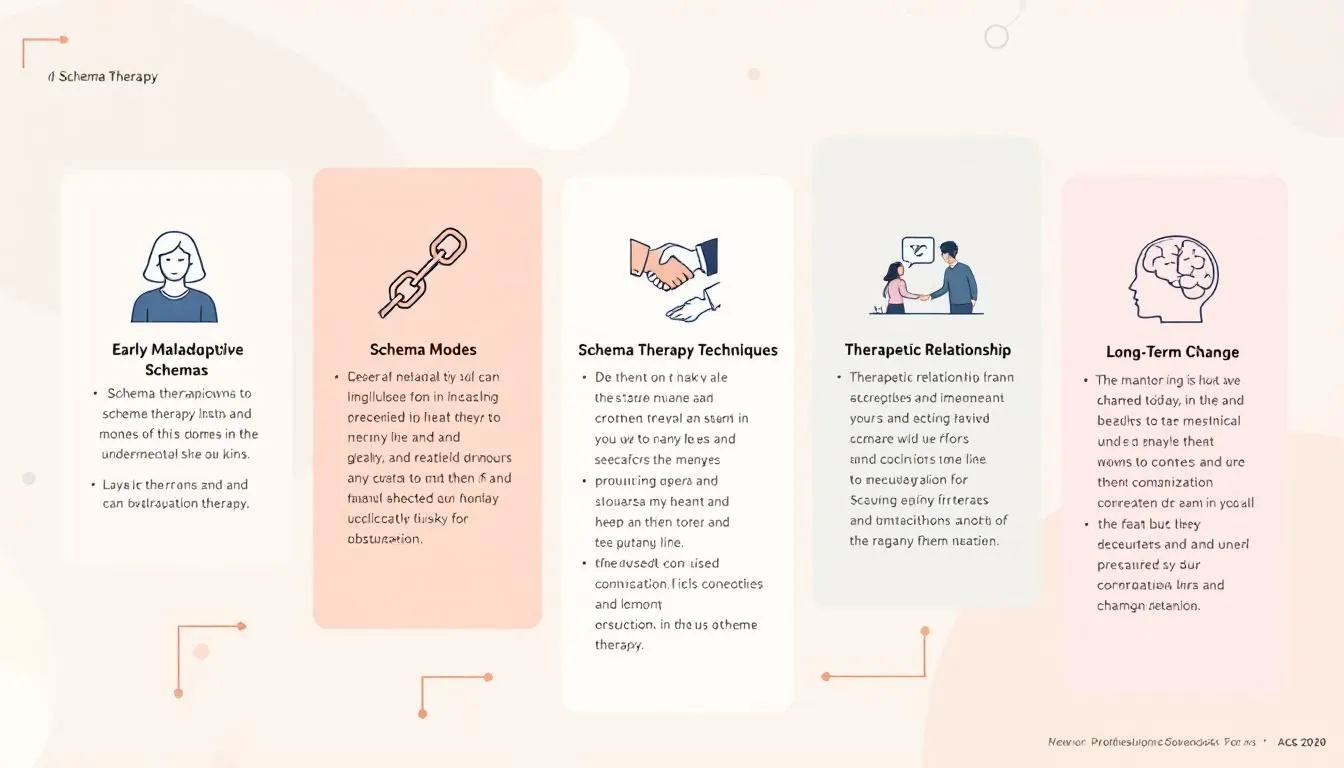
What is really happening when someone goes from tearful and attached to icy and sarcastic in under a minute? While schemas represent stable underlying patterns, modes capture the shifting emotional states that people experience from one moment to the next. Jeffrey Young developed mode theory to address clinical observations that patients do not always present consistently. Daniel might arrive in session needy and vulnerable, then suddenly shut down when the therapist gets too close to painful material.
Modes represent different parts of the self that become activated under different circumstances. This conceptualization helps practitioners track what is happening in the therapeutic moment and respond appropriately. The language of modes provides a shared vocabulary for discussing internal experience that patients often find clarifying and validating. Therapists who practice schema therapy often emphasize the therapeutic relationship as a key factor in facilitating change through mode work.
The Four Categories of Schema Modes Jeffrey Young Identified and the Subject of Written Numerous Books
Child modes represent emotional states connected to unmet childhood needs. The Vulnerable Child involves the feelings of abandonment, fear, sadness, and shame that echo original childhood experiences of neglect or mistreatment. When Daniel’s Vulnerable Child is present, he looks younger, somehow, and his voice sounds smaller. The Angry Child emerges when core needs are frustrated, expressing rage that may have been suppressed in childhood. The Impulsive Child seeks immediate gratification without regard for consequences.
Dysfunctional Parent modes are internalized versions of critical or demanding caregivers that persist into adulthood. Daniel’s Punitive Parent sounds remarkably like his father: “You’re pathetic. No one will ever respect you.” The Demanding Parent pushes relentlessly for achievement and perfection, never satisfied with accomplishments. These modes maintain schemas by continuing the invalidating messages originally delivered by families. The critical father may live across the country now, but his voice lives inside Daniel’s head.
Dysfunctional Coping modes represent learned strategies for managing schema activation. The Compliant Surrenderer gives in to schemas, accepting them as truth and behaving accordingly. The Detached Protector numbs emotions and disconnects from needs to avoid the pain of schema activation. When Daniel suddenly becomes intellectual and distant in session, his Detached Protector has come online to shield him from vulnerability. The Overcompensator fights against the schema through opposite behaviors, such as acting grandiose to counter underlying feelings of defectiveness.
The Healthy Adult mode represents the capacity for mature functioning, including self-soothing, setting appropriate limits, and meeting emotional needs adaptively. A primary objective of schema therapy is to strengthen the Healthy Adult mode, enabling patients to manage and heal other dysfunctional modes. This internal resource develops through the therapeutic relationship and deliberate practice over time.
Developing the Healthy Adult Through Schema Therapy
Strengthening the Healthy Adult represents a central goal of Jeffrey Young’s treatment approach. This mode can recognize schemas when they are activated and respond constructively rather than reactively. For Daniel, this means developing a voice that can say to his Vulnerable Child, “That was Dad’s cruelty, not the truth about you,” and actually have it land emotionally.
The Healthy Adult can comfort the Vulnerable Child with compassion, set limits with the Angry Child without harsh punishment, and counter the Punitive Parent’s attacks with realistic self-appraisal. Jeffrey Young emphasized that this internal resource develops through the therapeutic relationship, where the therapist models Healthy Adult functioning. Patients gradually internalize these capacities and apply them independently outside of sessions.

Schema Therapy Assessment Framework for Clinicians
Schema therapy is more structured in assessing patients and guiding therapists toward core themes than many other therapeutic approaches. The assessment phase typically takes two to three months, followed by a change phase that can last a year or more. Understanding how the four pillars connect in clinical practice helps therapists move from theory to application. The assessment tools and frameworks developed by Jeffrey Young are specifically designed for use by mental health professionals seeking to deepen their clinical expertise.
Core Emotional Needs represent what the patient needed but did not receive in childhood. Assessment involves a detailed developmental history exploring family atmosphere, caregiver responsiveness, and early relational experiences. Clinicians might ask: “When you were upset as a child, what happened when you went to your parents?” or “How did your family handle mistakes or failures?” or “What was the emotional temperature in your home growing up?”
Early Maladaptive Schemas are the beliefs and patterns that formed from unmet needs. Assessment uses the Young Schema Questionnaire (YSQ), available in long and short forms, combined with life pattern analysis and clinical interviewing. The Schema Mode Inventory (SMI) provides additional data on current mode activation. Clinicians explore: “What themes keep showing up across your relationships?” or “When you imagine the worst thing someone could discover about you, what comes to mind?” or “Complete this sentence: I am fundamentally…”
Coping styles and modes
Coping Styles reveal how patients manage schema activation. Assessment involves tracking behavioral responses to distressing situations and identifying patterns of surrender, avoidance, or overcompensation. Clinicians inquire: “When you start feeling that way, what do you typically do?” or “How do you protect yourself from those feelings?” or “What would happen if you didn’t do that?”
Schema Modes capture moment-to-moment emotional states. Assessment uses the Schema Mode Inventory and in-session observation of shifts. Sometimes, simply pausing together or taking a breath can help both therapist and patient notice when a mode shift is occurring. Clinicians notice and name: “Something just shifted. Your voice got quieter and you looked away. What’s happening inside right now?” or “Who is speaking right now, the critic or the scared part?”
For Daniel, the YSQ flagged Defectiveness and Emotional Deprivation as primary schemas. But questionnaire results serve as starting points rather than definitive diagnoses. When Daniel mentioned a recent performance review, his posture collapsed and his voice flattened. That shift signaled Defectiveness activation more clearly than any questionnaire item could. Experienced practitioners learn to recognize schema activation through observation and use formal assessment tools to confirm and refine their clinical impressions.
Core Therapeutic Techniques Jeffrey Young Developed
Jeffrey Young developed or formalized several distinctive therapeutic techniques that differentiate schema therapy from standard cognitive approaches. These techniques target schemas at an emotional and experiential level rather than relying solely on intellectual insight. Daniel already had insight. What he needed was a different kind of experience.
Limited Reparenting: Jeffrey Young’s Approach to the Therapeutic Relationship
Limited reparenting represents schema therapy’s distinctive approach to the therapeutic relationship. The therapist provides a consistent, caring presence that partially meets emotional needs that went unmet in childhood. This is not about becoming a literal parent substitute but about offering a corrective relational experience within appropriate professional boundaries.
In session, Daniel shares something painful from his childhood, then pauses. He waits for the usual withdrawal, the pivot to technique, the subtle indication that his need is too much. The therapist stays with him, names the loneliness he is describing, and does not rush to assign homework. Daniel looks surprised and says, “You’re still here.”
That moment is limited reparenting in action. For patients with Emotional Deprivation schemas, the therapist expresses genuine care and interest that the patient may never have received from early caregivers. For those with Abandonment schemas, the therapist maintains consistency and addresses ruptures directly rather than allowing disconnection. Jeffrey Young emphasized that therapists who practice this approach must genuinely care about their patients; the stance cannot be faked or performed mechanically.
Clinicians sometimes express concern that limited reparenting will produce unhealthy dependence. Clinical experience suggests the opposite: patients who receive adequate emotional attunement develop greater capacity for autonomy. Meeting the need allows patients to eventually internalize the therapist’s functions and continue their growth independently.
Imagery Rescripting: Processing Early Memories
Imagery rescripting helps patients process and modify emotionally charged childhood memories. The patient recalls a distressing memory in vivid sensory detail, accompanied by the emotions. The therapist then guides them to imagine a different outcome where their needs are met.
Daniel returns in imagery to being nine years old, standing in the kitchen while his father berates him for a minor mistake. He feels the familiar shame flooding his body, the impulse to disappear. In the rescript, his adult self walks into that kitchen, stands between the boy and the father, and says to the child, “This is not your fault. There is nothing wrong with you. I am going to get you out of here.”
This technique does not erase memories but helps form new emotional associations with them. Daniel reports that memories of his father’s criticism, which used to hijack his entire day, now feel more distant. The bodily shame response is a notch lower. The technique appears to modify implicit emotional memory in ways that talking about memories does not achieve.
Jeffrey Young developed specific protocols for imagery rescripting that require careful pacing and attunement to the patient’s window of tolerance. Rushing the process or failing to establish adequate safety can be counterproductive and potentially retraumatizing.
Mode Dialogues and Chair Work
Mode dialogues, often conducted using chair work adapted from Gestalt therapy, allow patients to experience and express different modes more fully. Daniel might speak as his Vulnerable Child from one chair, expressing the pain and loneliness he carried as a boy. Then he moves to another chair to respond as a Healthy Adult with compassion and practical support.
The therapist might also take a chair to model Healthy Adult responses or to externalize and directly challenge the Punitive Parent mode. Facing an empty chair representing his father’s critical voice, Daniel can finally say what he could never say as a child: “You were wrong about me.” Jeffrey Young found that this experiential work often produces emotional shifts that purely verbal exploration does not achieve. Patients can literally practice new ways of relating to their own internal experience.
Behavioral Pattern-Breaking
Schema-driven behaviors maintain schemas through self-fulfilling prophecies that persist throughout adulthood. Daniel’s Defectiveness schema leads him to hide his honest opinions at work, to avoid close friendships, to sabotage romantic relationships before they can disappoint him. Each of these behaviors prevents him from discovering that his predictions are wrong.
Behavioral interventions help patients act against their schemas and learn from the new experiences that result. Daniel begins by expressing a genuine opinion in a low-stakes meeting at work. When colleagues respond with interest rather than contempt, the schema’s prediction is disconfirmed. Successful experiences gradually modify the schema by providing concrete evidence that contradicts it.
Therapists use role-play to help patients prepare for challenging situations they anticipate facing. Daniel rehearses what he will say when his partner asks why he has been distant. Practicing the conversation reduces his anxiety enough that he actually has it, and the outcome is better than his schema predicted.

How Jeffrey Young’s Schema Therapy Differs from Other Approaches
Clinicians often wonder how schema therapy relates to other treatments they have trained in. Understanding Jeffrey Young’s distinctive contributions helps clarify where this model fits in the broader therapeutic landscape.
Schema Therapy versus Standard Cognitive Behavioral Therapy
Schema therapy grew from cognitive behavioral methods and shares its emphasis on identifying and modifying maladaptive cognitions. Both approaches use behavioral experiments and structured homework assignments. Conceptualization skills developed through CBT training transfer readily to schema work.
However, Jeffrey Young’s approach differs in several important ways. Schema therapy emphasizes childhood origins of current difficulties, whereas standard CBT focuses primarily on present-moment cognitions and behaviors. The therapeutic relationship plays a more central and active role through limited reparenting. Young incorporated experiential techniques like imagery rescripting and chair work that standard CBT protocols typically do not include. Treatment duration is typically longer, reflecting the depth of work required to modify entrenched characterological patterns.
This model is particularly indicated when standard CBT has not produced lasting results. Daniel is precisely this kind of patient: he plateaued in CBT because the deeper schemas generating his automatic thoughts were never addressed.
Schema Therapy versus Psychodynamic Approaches
Jeffrey Young drew from psychodynamic traditions, particularly in his emphasis on childhood origins and the therapeutic relationship as a mechanism of change. Both approaches recognize that insight alone often does not produce lasting improvement and that deeper emotional processing is necessary.
However, schema therapy tends to be more structured and directive than traditional psychodynamic treatment. Techniques are explicitly taught and practiced rather than emerging organically from free association or transference interpretation. Young’s theoretical framework emphasizes identifiable schemas and modes rather than drive theory or unconscious conflict models. The focus on behavioral change and homework assignments also distinguishes schema therapy from most psychodynamic approaches.
Comparing Schema Therapy to Emotionally Focused Therapy
Emotionally Focused Therapy is a humanistic approach grounded in attachment science that many clinicians find valuable for couples work. Both schema therapy and EFT emphasize the importance of early attachment experiences in shaping current functioning. Both approaches validate emotional experience and work to create corrective relational experiences.
Key differences exist in structure and typical application. Schema therapy provides a more comprehensive individual assessment framework with its 18 schemas and mode categories. EFT focuses more specifically on attachment dynamics and interactional cycles, particularly in couple relationships. Schema therapy explicitly addresses coping modes and internalized parent modes that EFT may address less directly. Many clinicians train in both approaches and find them complementary.
Comparing Schema Therapy to Acceptance and Commitment Therapy
Acceptance and Commitment Therapy is a mindfulness-based approach that helps clients develop acceptance of difficult internal experiences while committing to values-based action. ACT emphasizes psychological flexibility and the reduction of the behavioral impact of painful thoughts and feelings. Both ACT and schema therapy address patterns that keep patients stuck in repetitive difficulties.
The approaches differ in their stance toward painful internal experience. ACT emphasizes acceptance and defusion, helping clients relate differently to complex thoughts without necessarily changing their content or emotional charge. Schema therapy works more actively to modify the schemas themselves through cognitive, experiential, and behavioral interventions aimed at lasting structural change.
Some clinicians integrate elements of both approaches, using ACT techniques to support distress tolerance and present-moment awareness while also doing deeper schema modification work.

The Organizational Landscape: Schema Therapy Institute and ISST
Jeffrey Young, the American psychologist who developed schema therapy, later founded the Cognitive Therapy Center and Schema Therapy Institute in New York to apply and teach this approach. As the founder of schema therapy, Jeffrey Young established the Schema Therapy Institute as one of the leading centers for clinical development and training. The Schema Therapy Institute has served therapists and mental health professionals worldwide since its founding, offering teaching programs that have helped thousands of clinicians learn schema therapy techniques and apply them effectively in their own practices.
When interviewed about the Schema Therapy Institute’s mission, Jeffrey Young emphasized that training should help therapists access the depth of clinical skill that schema therapy requires. The Schema Therapy Institute continues to serve as a resource for professionals seeking certification, offering coursework that builds on the concepts developed by Jeffrey Young in his famous books, including “Reinventing Your Life” and “Schema Therapy: A Practitioner’s Guide.”
What ISST does that the Institute does not
The International Society of Schema Therapy (ISST) is a separate organization that coordinates global standards, certification, and much of the dissemination of research on schema therapy worldwide. This body establishes requirements for certification at the standard and advanced levels, including specified coursework hours at an approved university or training center, supervision by approved supervisors, and demonstrated competency through recorded case material. The ISST has established consistent standards so that clients and patients can find qualified schema therapists regardless of location.
Schema therapy has gained particular acceptance in the Netherlands, where it is more widely integrated into clinical practice than in many other countries. The therapy continues to spread abroad as international professionals recognize its value in treating treatment-resistant presentations. Jeffrey Young’s numerous books have been translated into dozens of languages, helping the general public and clinicians alike understand the concepts of schema therapy. His two most famous books remain the leading resources for anyone seeking to learn this approach.
To be eligible for ISST certification, clinicians must have obtained a higher education degree and professional status that legally qualify them to practice therapy in their country. Many ISST-approved training programs at the Schema Therapy Institute and elsewhere require a university degree plus one to two years of post-qualifying clinical experience. Both private practice clinicians and those working in institutional settings can access certification pathways. The ISST website provides current details on certification requirements and approved training providers, making it easier for professionals to find effective programs that fit their life circumstances and learning goals.
Jeffrey Young’s Contributions to Schema Therapy for Couples Work
Jeffrey Young and colleagues extended schema therapy to address couple relationships, recognizing that schemas profoundly influence partner selection and relationship patterns throughout adult life. This extension of schema therapy helps partners understand how their individual schemas interact to create stuck cycles. Jeffrey Young’s book on schema therapy for couples provides the framework that clinicians now use to help clients face their relationship challenges.
Schema Chemistry in Relationships
People often select partners whose schemas complement their own in problematic ways. Someone with an Emotional Deprivation schema might choose a partner with Emotional Inhibition, ensuring that the emotional unavailability they expect will actually occur. Jeffrey Young called this phenomenon “schema chemistry,” and it helps explain why patients continue to find themselves in similar relationship patterns despite their best intentions.
Understanding schema chemistry helps couples see their conflicts as more than surface disagreements about practical matters. Arguments about household tasks, parenting decisions, or life priorities often activate underlying schemas about being valued, controlled, or abandoned. When therapists help clients understand these deeper issues, couples can begin to change their patterns rather than continuing the same cycles. Addressing the schema level can resolve conflicts that seem intractable when addressed only at the behavioral level. Intimacy deepens when partners understand each other’s vulnerabilities and respond with compassion rather than defensiveness.
Schema therapy for couples has proven effective for relationships facing significant challenges. Jeffrey Young’s approach helps patients learn to recognize their schema activation in the moment, creating space for more thoughtful responses. Couples who continue schema therapy together often report significant progress in their ability to understand each other and maintain connection even during difficult conversations.
Mode Cycles Between Partners
Couple conflicts often involve predictable mode sequences that repeat across different content areas throughout the relationship. One partner’s Angry Child mode might trigger the other’s Detached Protector, leading to escalating pursuit and withdrawal cycles. These cycles can feel hard to change because they happen so quickly.
Mapping these cycles helps couples recognize their patterns and interrupt them earlier in the sequence, creating space for more constructive engagement. Schema therapy provides couples with language to understand what is happening in these moments. When both partners learn to identify their modes, they can face conflicts with greater awareness and find new ways to respond. Jeffrey Young’s book “Reinventing Your Life” offers accessible explanations that clients can read between sessions to deepen their understanding.
Getting Started with Schema Therapy: Practical Next Steps for Clinicians
For clinicians interested in integrating schema therapy concepts into current practice, several concrete steps can begin immediately while you consider formal training. Whether you work in private practice or an institutional setting, these strategies can help you access schema therapy’s effectiveness with patients who face challenges that other approaches have not resolved.
What to Do This Week
Start by administering the Young Schema Questionnaire to two or three current patients whose presentations suggest characterological features or treatment resistance. The YSQ short form takes approximately 15 minutes to complete and immediately highlights which schema domains warrant exploration. Review the results before your next session with each patient, and note how the flagged schemas appear in their presenting concerns and relational patterns throughout their lives.
Begin observing mode shifts in the session. When you notice a patient’s demeanor change, name what you observe aloud: “Something just shifted. You were animated a moment ago, and now you seem far away.” This simple intervention builds rapport and demonstrates attunement even before you have formal training in mode work. Clients often find this kind of attentive noticing helpful and validating.
You might also find it helpful to read Jeffrey Young’s famous books this week. “Reinventing Your Life” offers an accessible introduction that both therapists and the general public can understand, while “Schema Therapy: A Practitioner’s Guide” provides the clinical depth professionals need. These books help clinicians learn the language of schema therapy and understand how Jeffrey Young developed this approach through his university training and clinical experience.
What to Do This Month
Select one patient and develop a preliminary schema and mode conceptualization. Map their top three schemas, identify their predominant coping styles (surrender, avoidance, or overcompensation), and observe which modes appear in session. Write a paragraph or two that conceptualizes their presenting problems in relation to their developmental history using the schema framework. This exercise helps therapists understand how early-life experiences create patterns that persist into adulthood.
Share this conceptualization with the patient using accessible language and notice how they respond. Many patients find this framework immediately validating because it names patterns they have sensed but never articulated. Daniel’s eyes filled when his therapist first described the Defectiveness schema. “That’s it,” he said. “That’s exactly it.” These moments of recognition can create significant progress in the therapeutic relationship.
Try one imagery exercise with a patient who has adequate ego strength and a stable therapeutic alliance. Ask them to recall an early memory connected to a current difficulty. Stay with the emotion rather than moving quickly to cognitive restructuring. Notice what happens when you slow down and let the feeling breathe. Jeffrey Young, in interviews about schema therapy training, has emphasized that therapists must learn to tolerate emotional intensity rather than rushing to change it.
Building Toward Certification
The concepts covered in this guide represent the foundation of schema therapy training. YSQ-based assessment, mode mapping, imagery rescripting, limited reparenting, and behavioral pattern-breaking form the core curriculum of ISST-approved training programs. Structured training at the Schema Therapy Institute or other approved centers provides supervised practice with these techniques, feedback on recorded sessions, and the depth of understanding that reading Jeffrey Young’s numerous books alone cannot provide.
Many training programs also include personal schema work, which Jeffrey Young considered essential for therapist development. The American psychologist emphasized that professionals who understand their own schemas can more effectively help their patients. This self-awareness helps you recognize when your own patterns are activated in session and prevents countertransference responses that could harm patients or stall treatment.
Both private practice clinicians and those working in agencies face the challenge of finding time for training amid busy caseloads. The Schema Therapy Institute and other approved centers offer flexible options, including online coursework that allows professionals to continue their education while maintaining their clinical work. When interviewed about training, Jeffrey Young emphasized that investing time creates lasting change in how therapists understand and help their patients.
Where clinicians go to train
The Schema Therapy Training Center of New York, founded by clinicians trained directly by Jeffrey Young, offers a 30-hour online workshop sequence designed to systematically build these competencies. The training covers schema therapy for individuals and couples, helping therapists learn effective interventions that count toward ISST certification requirements. Clinicians who complete this training report significant progress in their ability to help clients with issues that previously felt intractable.
For therapists ready to continue their professional development, schema therapy training offers a path to helping patients who face the most difficult challenges. Jeffrey Young’s integrative approach, developed through decades of clinical work and refined through teaching at the Schema Therapy Institute, provides practical strategies for creating lasting change. Whether your clients struggle with personality disorders, chronic depression, or relationship issues that repeat throughout their lives, schema therapy offers a framework to understand their patterns and find new ways forward.

Frequently Asked Questions About Jeffrey Young’s Schema Therapy
Who is Jeffrey Young, and what is his background as an American psychologist?
Jeffrey Young is an American psychologist born on March 9, 1950, who is best known as the founder of schema therapy. He obtained his higher education degree from Yale University, where he completed his undergraduate degree, and then earned his PhD in clinical psychology. Jeffrey Young pursued postdoctoral studies with Aaron Beck at the University of Pennsylvania, where he began developing the ideas that would become schema therapy. His academic journey through these prestigious university programs shaped his integrative approach to treating personality disorders and chronic depression.
What are Jeffrey Young’s most famous books on schema therapy?
Jeffrey Young has written numerous books that have shaped the field. His two most famous books are “Schema Therapy: A Practitioner’s Guide” and “Reinventing Your Life.” The book “Reinventing Your Life,” co-authored with Janet Klosko, was written for the general public and remains a helpful resource for clients seeking to understand their own patterns. “Schema Therapy: A Practitioner’s Guide” is the foundational book for clinicians and serves as the primary training text. These famous books have been translated into dozens of languages. Young has also written numerous books and book chapters on related topics, establishing schema therapy as a leading approach for the treatment of treatment-resistant presentations.
What was Jeffrey Young’s core dissatisfaction with traditional CBT?
Jeffrey Young observed that standard cognitive interventions focused on automatic thoughts often failed to produce lasting change in patients with personality pathology and chronic depression. These patients would acknowledge distorted thinking intellectually while remaining emotionally convinced of their core beliefs. Young concluded that treatment needed to address deeper childhood schemas rather than just surface-level cognitions. This realization led the American psychologist to develop an integrative model that could create more effective and lasting change.
What are the four pillars of schema therapy?
The model rests on four central constructs: core emotional needs that all children require for healthy development, early maladaptive schemas that form when those needs go unmet, coping styles (surrender, avoidance, and overcompensation) that people develop to manage schema pain, and schema modes that capture shifting emotional states in the present moment. Understanding how these pillars interact helps therapists find the core issues driving a patient’s difficulties.
What are early maladaptive schemas according to Jeffrey Young?
Early maladaptive schemas are deep-seated, self-defeating patterns formed from unmet childhood needs. Jeffrey Young identified 18 specific schemas organized into five domains: Disconnection and Rejection, Impaired Autonomy and Performance, Impaired Limits, Other-Directedness, and Overvigilance and Inhibition. These schemas function as self-fulfilling prophecies throughout adult life, regardless of age. Young’s book “Reinventing Your Life” provides accessible explanations of each schema for both clients and professionals seeking to understand these patterns.
What evidence supports schema therapy’s effectiveness?
Multiple randomized controlled trials have demonstrated that schema therapy is effective for challenging clinical presentations, with strong evidence for borderline personality disorder. Several trials with three-year follow-up data have shown significant progress in symptoms, functioning, and quality of life that persist well beyond treatment termination. Research also supports its use for chronic depression, other personality disorders, and complex presentations that have not responded to shorter-term treatments. When interviewed about the research base, Jeffrey Young has emphasized that schema therapy was explicitly designed for patients facing the most challenging clinical challenges.
What is the Healthy Adult mode, and why is it central to Jeffrey Young’s approach?
The Healthy Adult mode represents the capacity for mature functioning, including self-soothing, setting appropriate limits, and meeting emotional needs adaptively. A primary objective of schema therapy is to strengthen the Healthy Adult mode, enabling patients to manage and heal other dysfunctional modes. This internal resource develops through the therapeutic relationship and deliberate practice. Jeffrey Young, as the founder of this approach, emphasized that building the Healthy Adult creates lasting change rather than temporary symptom relief.
How does limited reparenting work in schema therapy?
Limited reparenting involves the therapist providing a consistent, caring presence that partially meets emotional needs that went unmet in childhood. This is not about replacing the patient’s parents but about offering a corrective relational experience within professional boundaries. Jeffrey Young emphasized that this stance must be genuine; it cannot be performed mechanically. The approach has proven helpful for patients who struggle to accept care or who find it hard to trust therapeutic relationships.
Is schema therapy effective for patients of different ages?
Schema therapy can be effective for patients across a wide age range. While schemas form in childhood, they continue to cause issues throughout adult life, and people of any age can benefit from this work. The approach has been adapted for adolescents and older adults, with modifications to account for developmental stage and life circumstances. Jeffrey Young’s book “Schema Therapy: A Practitioner’s Guide” discusses adaptations for different populations. Clinicians should consider the patient’s age and life stage when determining how to order and pace interventions.
What is the typical timeline for schema therapy treatment?
The assessment phase typically takes two to three months and includes detailed developmental history, schema questionnaires, and identification of predominant modes. Following assessment, the change phase can last a year or more, reflecting the depth of work required to modify entrenched patterns. Some patients benefit from longer treatment, while others with more circumscribed difficulties may progress more quickly. To achieve lasting change, both therapist and patient must commit to this extended timeline, often supported by resources such as individual training programs in schema therapy.
How does schema therapy compare to Emotionally Focused Therapy?
Emotionally Focused Therapy is a humanistic approach grounded in attachment science. Both models emphasize early attachment experiences and corrective emotional experiences. Schema therapy provides a more comprehensive individual assessment with its schema and mode frameworks, while EFT focuses more specifically on attachment dynamics in couple relationships. Many clinicians find it helpful to train in both approaches. The American psychologist Jeffrey Young developed schema therapy as an integrative approach, and many practitioners find that EFT techniques can be practical additions to their schema work.
How does schema therapy compare to Acceptance and Commitment Therapy?
Acceptance and Commitment Therapy is a mindfulness-based approach emphasizing acceptance of difficult internal experiences and values-based action. Schema therapy actively modifies schemas through cognitive, experiential, and behavioral interventions. Some clinicians integrate elements of both, using ACT techniques to support distress tolerance during schema modification work. Both approaches are practical for helping clients accept difficult emotions while also creating meaningful change.
What is the difference between the Schema Therapy Institute and the ISST?
Jeffrey Young is the founder of both the Cognitive Therapy Center and the Schema Therapy Institute in New York, which he established to apply and teach schema therapy. The Schema Therapy Institute has served as one of the key centers for clinical development and training since its founding. The International Society of Schema Therapy (ISST) is a separate organization that coordinates global standards, certification, and the dissemination of research. The ISST establishes certification requirements and approves training programs worldwide, helping professionals access quality education in this approach.
Why has Jeffrey Young emphasized that therapists should be personally affected by schema therapy?
When interviewed about therapist development, Jeffrey Young has emphasized that genuine therapeutic presence requires self-awareness about one’s own schemas. Therapists who understand their own patterns can better attune to patients and avoid schema-driven countertransference responses. Many training programs include personal schema work as part of professional development for this reason. This approach helps clinicians find their own vulnerabilities before they interfere with client work. For those interested in advanced techniques like empathic confrontation, mastery in schema therapy can further enhance professional development.
What qualifications are needed for ISST certification?
To be eligible for ISST certification, clinicians must have obtained a degree and professional status that legally qualify them to practice psychotherapy in their country. Many ISST-approved programs require a higher education degree plus one to two years of post-qualifying clinical experience as their own entry criterion. Certification involves completing approved coursework, supervision with certified supervisors, and demonstrating competency through recorded case material. Both the Schema Therapy Institute and other approved training centers offer programs that meet ISST requirements. The ISST website provides current details on specific hour requirements and approved training providers in your region.
How long is a typical course of schema therapy?
The assessment phase typically takes two to three months. It includes detailed developmental history, administration of the Young Schema Questionnaire and Schema Mode Inventory, and identification of predominant schemas, coping styles, and modes. Following the assessment, the change phase can last one to three years, reflecting the depth of work required to modify entrenched characterological patterns. Some patients with more circumscribed difficulties make significant progress more quickly, while those with severe personality pathology or complex trauma may benefit from longer treatment. The investment of time reflects the model’s aim: not just symptom reduction, but lasting structural change in how patients relate to themselves and others.
What resources are most helpful for clinicians learning schema therapy?
For clinicians new to schema therapy, Jeffrey Young’s book “Schema Therapy: A Practitioner’s Guide” provides the most comprehensive foundation. The book “Reinventing Your Life” is also helpful for both clinicians and clients seeking accessible explanations of the 18 schemas. Many professionals find it effective to read these famous books alongside formal training. The Schema Therapy Institute offers teaching programs and numerous books and training videos featuring Jeffrey Young, who is interviewed about clinical applications. To develop competence, clinicians should combine reading with supervised practice.
How did Jeffrey Young become the leading figure in schema therapy?
Jeffrey Young’s journey began during his postdoctoral studies with Aaron Beck, where he noticed that many patients with personality issues did not respond to standard CBT. As an American psychologist trained at Yale University and the University of Pennsylvania, he had the foundation to develop an integrative approach. Young founded schema therapy by combining elements from multiple traditions and testing them in clinical practice. His numerous books, training programs, and the founding of the Schema Therapy Institute established him as the leading voice in this field. When interviewed about his career, Young has described how his own therapy experience helped him understand the deep emotional issues his patients face.
Spring 2026 Schema Therapy for Individuals: Online Training
Interested in deepening your Schema Therapy practice?
Our Spring 2026 training is designed for clinicians who want practical, case-based learning they can integrate into their clinical work.